Pages

Friday, May 8, 2026

Waking Up in Pain? Your Sleep Position May Need Adjusting.

 Stiffness, achy joints, acid reflux, snoring — experts explain the pros and cons of the three main ways people sleep.

Rachel Levit Ruiz


Ever wake up with a crick in your neck or a pain in your lower back? Are you roused from sleep by heartburn, or a partner complaining that you snore?

If you answered “yes” to any of these questions, your sleep position might be to blame.

There is no one “right” way to sleep, said Dr. Indira Gurubhagavatula, a professor of sleep medicine at the University of Pennsylvania Perelman School of Medicine.

But if you are waking up with discomfort or stiffness or having restless nights, certain adjustments to your sleeping posture may help. Here are some of the most common issues associated with how people sleep, and what to do about them.

Many of us sleep on our sides with no problem. But for some people — especially those with joint issues or who are older — it can put a lot of pressure on the shoulder, hip and knees, said Dr. Rohan Jotwani, a pain medicine specialist at NewYork-Presbyterian/Weill Cornell Medical Center in New York City.


For some, it’s easier to breathe when they sleep on the side that the narrower nostril is on, allowing air to flow unimpeded through the wider one, Dr. Suh said.

The goal when sleeping is to maintain the natural curvature of the spine and neck “without creating too many bends and twists and turns,” Dr. Jotwani said. Sleeping on your back is best for maintaining this alignment, he said, but it can also cause or exacerbate other issues.

The symptoms of obstructive sleep apnea, for instance — which occurs when the muscles in the throat relax during sleep and cause snoring and temporary pauses in breathing — can worsen when lying face up, said Azadeh Yadollahi, a scientist who studies sleep and airway disorders at the University Health Network in Toronto.

If you have sleep apnea, sleeping on your side can help keep the airway open and let you breathe more freely, Dr. Gurubhagavatula said.

Sleeping on your back may also worsen acid reflux symptoms by allowing stomach acid to seep into the esophagus. And while any sleeping position can lead to nasal congestion, lying face up can cause you to feel even more stuffy, especially when dealing with a cold or allergies, Dr. Suh said.

Propping up the top half of your body with a pillow or a wedge-shaped bolster helps relieve acid reflux, Dr. Gurubhagavatula said. Or try elevating the head of your bed by putting blocks under the legs of your bed frame, she said. Some research also suggests that sleeping on your left side can help, too.

Pregnant women are often told to avoid sleeping on their backs after about 20 weeks to prevent the uterus from putting pressure on a large vein that carries blood from the lower body to the heart. That could restrict blood flow to vital organs or lower blood pressure, leading to lightheadedness.

When pregnant, it’s safest to sleep on your side, especially the left side, as this moves the weight off the vein, Dr. Gurubhagavatula said. This should help with pregnancy-related acid reflux, too, she added.

This is the least common sleeping position, Dr. Gurubhagavatula said. It also tends to be the hardest on your spine.

Having your head turned to one side all night strains the neck, Dr. Jotwani said. And that can be compounded by a thick pillow that angles your neck upward.

The position can also hyperextend your lower back. In a review published in 2025, researchers found that sleeping on the stomach is associated with more lower back pain than sleeping on the back or side.

If you enjoy sleeping on your stomach but wake up with low back pain, it can help to put a small pillow under your pelvis. This prevents your abdomen from sinking into the mattress and putting too much arch in your back, Dr. Jotwani said. But if possible, he added, sleep on your back or side for better alignment.

Switching to a new position “can be very daunting,” Dr. Jotwani said. He recommended identifying a new position and then trying to spend at least a little time in it each night. Over time, your body will get used to it.

Strategic placement of pillows, special cushions or devices can help keep you in one position throughout the night, Dr. Gurubhagavatula said. To stay on your side, try placing a body pillow behind you, she suggested. There are also cushions that strap onto your back to keep you on your side, and electronic devices that vibrate when they sense that you’ve rolled onto your back. They’re the technological equivalent of getting elbowed by your bed partner, Dr. Yadollahi said.

If you’re new to sleeping on your back, Dr. Gurubhagavatula said you might be more comfortable with a small pillow under your knees, even if it feels awkward for the first few nights.

Your sleep position is just one of many factors that contributes to your overall sleep quality, Dr. Gurubhagavatula said. Maintaining a consistent sleep schedulegetting adequate exercise and keeping your bedroom dark and cool are all important.

But, she added, if getting a good night’s sleep can be “as simple as turning onto your side, then why not try it?”

A version of this article appears in print on April 7, 2026, Section D, Page 7 of the New York edition with the headline: Your Sleep Position May Cause You PainOrder Reprints | Today’s Paper | Subscribe


Tuesday, May 5, 2026

Harsh reality about estate planning in Malaysia


Filepic


OVER Rm90bil of wealth in Malaysia is currently frozen – not lost, not spent, just inaccessible.

Behind this staggering figure are families waiting months, sometimes years, to access money that could otherwise be used for mortgage payments, children’s education or medical bills.

This is the uncomfortable reality of estate planning in Malaysia. While many Malaysians work hard to build wealth through property, savings and investments, far fewer take the final step of ensuring that this wealth can be effectively passed on to their beneficiaries.

Estimates suggest that frozen estates in Malaysia have risen from Rm42bil in 2011 to as high as Rm90bil in recent years. According to a Bernama report in May last year, Rm13.3bil in unclaimed money was recorded by the Accountant General’s Department as of April 2025.

In news reports last year, Amanah Raya Berhad group managing director Ahmad Feizal Sulaiman Khan was quoted as saying that Rm65bil in assets, including real estate and cash belonging to deceased individuals, remain unclaimed due to lack of estate planning.

At the household level, this translates into delays, disputes and financial strain. At the national level, it represents idle capital that could otherwise contribute to economic activity.

Another reality that many overlook is that debts do not end when life does. Before any inheritance can be distributed, all of the deceased’s outstanding liabilities must be settled. This includes mortgages, personal loans, credit card balances and taxes.

In many cases, what appears to be a substantial estate might be reduced significantly after debts are cleared, leaving some families with far less than expected. In extreme cases, there may be nothing left at all.

Estate planning is often misunderstood as something complex or only relevant to the wealthy. In truth, it is a practical step that applies to anyone with dependents or assets.

From a practitioner’s perspective, three elements are critical.

First, legal clarity: A clear will or estate plan ensures that assets are distributed according to intention and reduces delays and disputes.

Second, debt awareness: Managing liabilities ensures that more of the estate can be preserved for beneficiaries rather than being consumed by obligations.

Third, liquidity planning: For families who need immediate access to funds, instruments such as insurance or structured arrangements can provide cash flow when it matters most without being tied up in legal processes.

These are not complicated strategies. They are basic safeguards that determine whether wealth can actually serve its purpose.

One of the biggest barriers to estate planning in Malaysia is attitude. Many people avoid the topic because it feels uncomfortable or premature while others assume they will get their assets without any complications.

But the evidence tells a different story. Failing to plan does not remove risk; it shifts the burden to the family often when emotions are high and urgent decisions must be made.

Estate planning should be viewed as a practical extension of responsible financial planning instead of a morbid exercise.

Ultimately, the true value of wealth lies not in how much we accumulate but in how effectively it protects the people we care about.

ASSOC PROF CHONG WEI YING Taylor’s Business School Taylor’s University

Monday, May 4, 2026

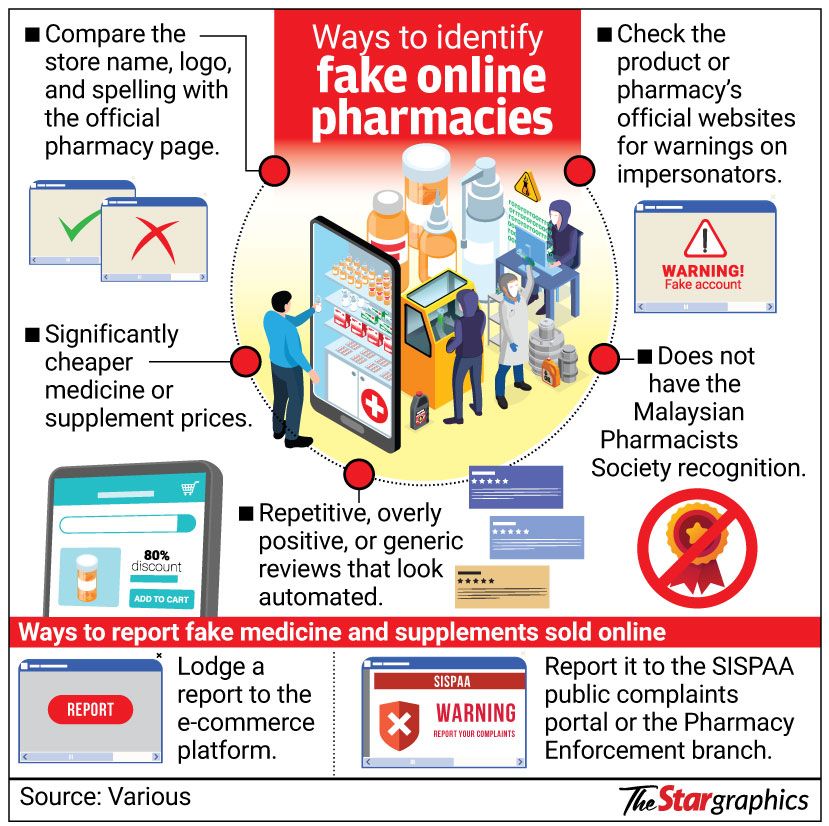
Drugstores not immune to fraud, Beware of cheap fake meds online

 Cases of stolen identity, couterfeit froducts

PETALING JAYA: What was first a mere question from a friend about discounted products ­quickly turned into a worrying discovery for pharmacist Rachel Gan May Shiang.

Someone was using her pharmacy’s identity to sell doubtful products.

CLICK TO ENLARGE
CLICK TO ENLARGE

“The store looked almost identical. The only difference was that one of the letters bore a small alphabet as opposed to mine.

“Unregistered products in the Malaysian market were also sold on that site,” said Gan, who foun­ded a pharmacy in Kota Kemuning, Shah Alam.

This led to complaints being made to the said e-commerce platform. Several of the product postings were then removed.

Days later, however, more fake accounts emerged.

“What’s even more worrying is that these products are being purchased.

“Besides the impersonation, there are wider public health concerns,” she said.

Gan, who is honorary secretary of the Malaysian Community Pharmacy Guild, questioned how the said platform vets its sellers, especially for those related to sectors such as pharmaceuticals.

Her case is not an isolated one, as even chain pharmacies are being targeted by fraudulent operators.

“Over the past year, we noticed this becoming increasingly rampant.

“At first, we received custo­mer enquiries, with many also ­chec­king the authenticity of the products at our physical stores.

“So we checked the sites daily and lodged reports with the relevant authorities every time our brand name is misused to sell health and supplement products,” said Alpro Pharmacy professional care and development manager Ng Yi Ling.

These stores impersonate the Alpro brand, logo and images, she said.

The only difference was in the capitalisation of the letters in the brand name.

“Our biggest concern is how consuming these products will impact the health of consumers. We do not know the contents of these products,” she said.

Du Kiat Seng and Ng Seng Wei, who are the brand owners and sole distributor of a supplement product in Malaysia, said they have received complaints about counterfeit products as recently as March.

“We tried ordering the product ourselves and found that it was clearly a counterfeit.”

The give­away was the absence of mandatory hologram tags.

The registration number was also a duplicated one, they said.

Both of them found that posts of doubtful pro­ducts would be taken down ­following complaints but they would reappear the next day on the same online store.

“There should be some sense of responsibility from platforms to do their due diligence before allowing anyone to list health products for sale online.”

Brego Life Sciences marketing manager Claris Wong said they discovered such issues happening since 2024.

“We received complaints online. The prices were between 30% and 40% cheaper.

“We purchased the products and saw that they were almost identical with our products, although there were subtle diffe­rences in the printing.

“There was even a hologram printed on it. But when we scanned it, we found the product was not registered,” she said.

Sh said there was an instance where a customer was hospita­lised after consuming a counterfeit product.

“Counterfeit products are dangerous.

“Our tests revealed that they do not have any of the active ingre­dients as claimed and may also contain unknown or harmful substances,” she said.

Related stories:

Save a dime, risk a life? Beware of cheap fake meds online

PETALING JAYA: It may seem like a good bargain online. But it comes with serious risks, as counterfeit medicines and supplements are still being sold on e-commerce platforms despite ongoing crackdowns.

TikTok Shop Malaysia said medicines and supplements are subject to requirements, inclu­ding the need for a MAL number or notification from the National Pharma­­ceutical Regulatory Agency (NPRA), before being lis­ted.

“Through our Intellectual Property Protection Centre, brands or authorised representatives can submit takedown requests for products and monitor their st

“There is no finish line when it comes to safety. Users are encou­raged to report these products, content and sellers through the in-app reporting channel,” said a spokesperson.

TikTok Shop Malaysia is wor­king with the Domestic Trade and Cost of Living Ministry and Health Ministry to address evolving forms of circumvention.

The spokesperson said conti­nuous investments are made to improve safety tools, technology and personnel, with more than US$1bil committed globally to protect users from fraudulent and dangerous activities.

Automated systems are also used to detect potential fraud, infringement, unsafe content or violative product listings, both before and after products or content are uploaded.

“Sellers must submit official documentation during registration, which is then verified against business and banking details to ensure authenticity.

“Store names are subject to strict guidelines to prevent misrepresentation, including restrictions on terms such as ‘official’, ‘flagship’ or ‘authorised’,” the spokesperson said.

Once approved, new sellers undergo a probationary period where daily orders and product listings are capped as they fami­liarise themselves with platform policies.

Between January and June this year, it said more than 70 million product listing attempts were rejected globally for policy violations, with a proactive removal rate exceeding 99.5%.

Some 1.4 million seller account registration applications that failed to meet its standards were declined, with more than 700,000 sellers removed during the same period due to shop-level violations.

“More than 900,000 reports from users viewing TikTok Shop videos or live streams were also reviewed,” the spokesperson said.

Shopee strictly prohibits the sale of counterfeit and prohibited items too, requiring all sellers to comply with local regulations and platform policies.

A spokesperson said the platform works closely with the Malaysian Pharmacists Society (MPS) to verify pharmacies and actively remove listings that violate its rules.

“We are committed to building a safe and trusted platform where shoppers can transact with confidence.

“We also use proactive monitoring and work with brands, law enforcement and the Health Ministry to detect and take action against sellers breaching our policies, including account suspension, permanent bans and, where appropriate, legal action.

“Users are encouraged to report suspicious or counterfeit pro­ducts via the ‘Report this Product’ option.”

Complaints can also be made to the Public Complaints Manage­ment System (SISPAA), which is used to manage public complaints, including reports of fake or unregistered medicines.

MPS president Amrahi Buang said all pharmaceutical products sold online must be registered with the Health Ministry and comply with laws including the Poisons Act, Sale of Drugs Act and the Medicines (Advertisement & Sale) Act and Regulations.

“Legitimate products have the Health Ministry hologram tag and the MAL number,” he said, ­adding that the number can be checked at the NPRA website.

He said MPS also signed a memo­randum of understanding (MOU) with an e-commerce platform to curb the sale of counterfeit drugs online.

There are several conditions to be fulfilled when applying to open an online store as per the MOU, including having a licensed pharmacist, ensuring the pro­ducts sold online can be tied to a physical store and confirming that the pharmacist is an MPS member.

“Pharmacists can check if the product is legitimate and advise you.

“We don’t just sell drugs. We want the best for our customers,” he said


Friday, May 1, 2026

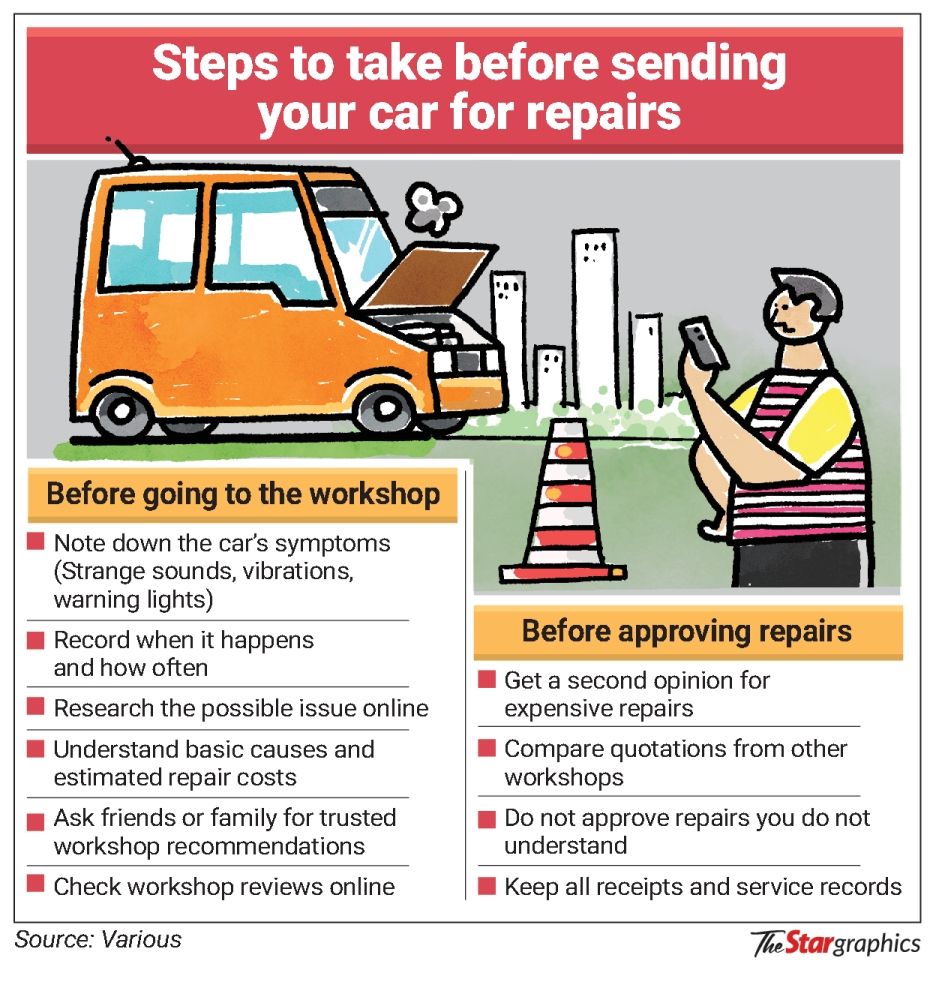
Workshops steering into scams

 
Motorists slammed with inflated bills for needless repairs

A mechanic repairing a car at a local workshop in Kuala Lumpur. — YAP CHEE HONG/The Star

PETALING JAYA: When Tan Chee Keong noticed unusual noises in his car, he did what any motorists would do – take the vehicle to a nearby workshop for checks.

Then came the shock – he was quoted close to RM20,000 for the repairs.

“They told me the steering rack, suspension system, mounting and several other components were all damaged,” the 69-year-old said.

Tan got suspicious when the mechanic failed to properly explain what the problem was.

“Some of what was pointed out did not match the issues I was having,” he said.

ALSO READ: Upfront pricing on auto repairs just a tap away

So, he sought a second opinion from another workshop.

“The mechanic checked the car, test drove it and found that only a few components needed changing. The repairs cost only RM6,000,” he said.

Tan’s case is not an isolated incident.

Many unscrupulous vehicle workshops are out to make a quick buck by “repairing” problems that do not exist

A Subang Jaya resident who wanted to be known as John took his wife’s sedan to a workshop last year after she complained of hearing some noises under the bonnet.

He said a workshop owner, whom he was familiar with, referred him to someone new, who he said was the chief technician.

“He hoisted the car up and took a cursory look at the absorbers and started to give a long list of parts that he said needed to be replaced.

“Besides the absorbers and the lower arms, he said the steering rack also needed changing.

“The quotation came up to RM7,000!” he said.

John then went for a second opinion with a trusted mechanic who told him only the absorbers needed to be replaced.

“I bought the parts elsewhere and he replaced them for me, charging me just RM300 for workmanship. The car runs fine till today,” he said.

Another motorist who wanted to be known as Raj, also experienced a car workshop trying to rip him off.

“The regular shopowner called in a worker I had not seen before to handle my complaints. The man said he was in charge of repairs and ordering parts.

“He said there were many parts that needed replacing, such as the fuel pump, mass airflow sensor, oxygen sensor and engine mounting.

“The estimate came up to several thousand ringgit. I was not happy and took my car elsewhere. And the car was fixed for a few hundred ringgit.”

This is daylight robbery,” he said.

For MK Leow, 29, his experience was slightly different.

When sending his car for servicing at an official service centre, he was hit with a quotation close to RM400.

“I just paid as I trusted the service advisor.

“But friends pointed out later that my bill was actually inflated with various add-ons that were not part of the mandatory service,” he said.

The add-ons included coolant sprays, ozone treatment service and more.

Related stories:

Friday, April 24, 2026

Chinese scientists discover rare-earth-rich new lunar minerals in Chang'e-5 mission samples

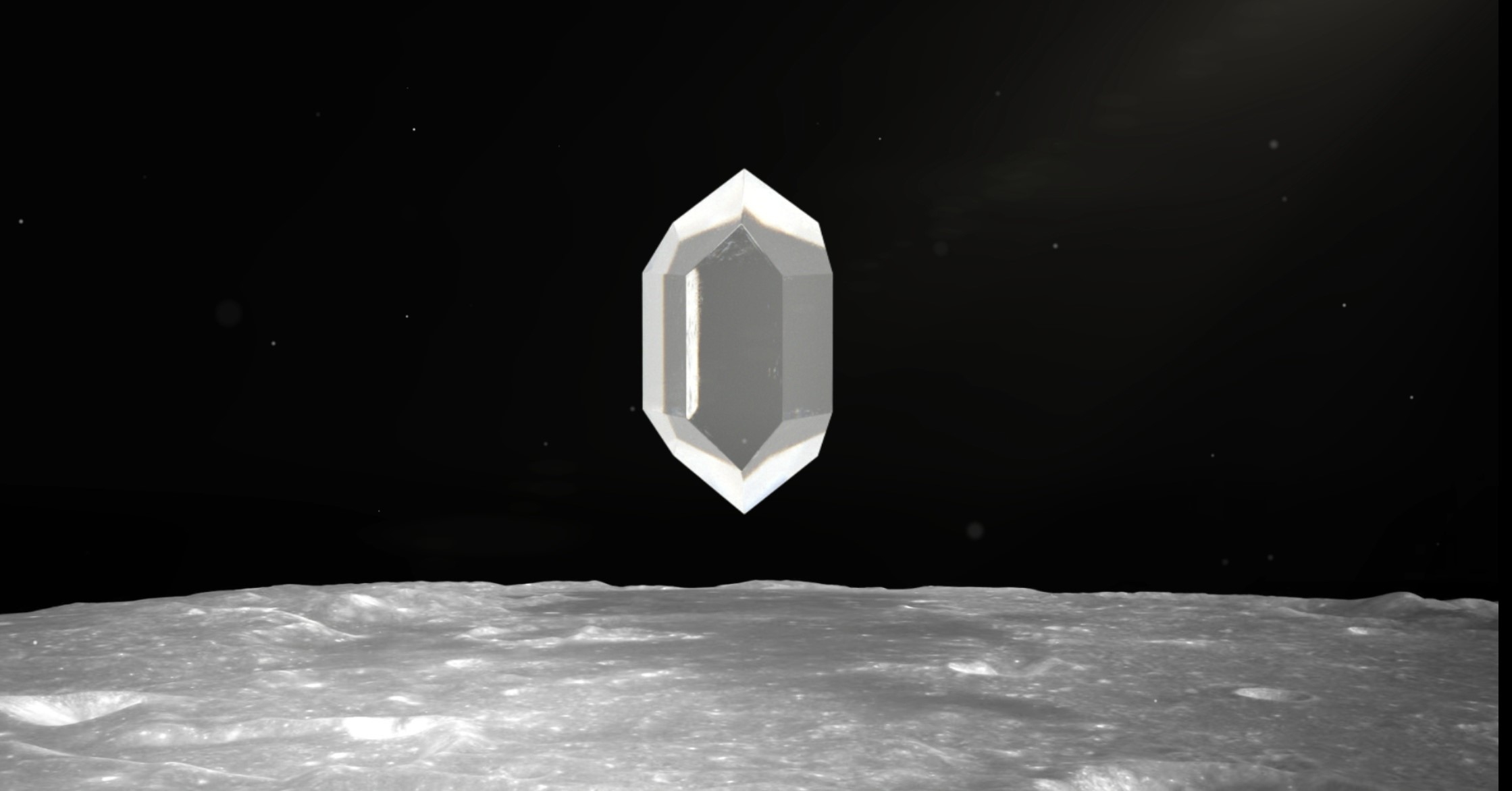
Ideal crystal structure of magnesiochangesite-(Y). Photo: Courtesy of Beijing Research Institute of Uranium Geology

Ideal crystal structure of magnesiochangesite-(Y). Photo: Courtesy of Beijing Research Institute of Uranium Geology


Ideal crystal structure of changesite-(Ce). Photo: Courtesy of Chinese Academy of Geological Sciences

Ideal crystal structure of changesite-(Ce). Photo: Courtesy of Chinese Academy of Geological Sciences


Chinese scientists have identified two previously unknown lunar minerals from the 1,731 grams of moon samples returned by Chang'e-5 mission, marking another major breakthrough in deep-space research. The findings were announced on Friday at the opening ceremony of the 11th China Space Day. The two newly discovered minerals have been officially approved and classified by the International Mineralogical Association. They are named magnesiochangesite-(Y) and changesite-(Ce).

This marks the second and third lunar minerals discovered by Chinese scientists, following the first discovery of changesite-(Y) in 2022. Globally, they are the seventh and eighth new lunar minerals identified in returned lunar samples.

The release of their ideal crystal structures drew strong reactions at the event. Though only a few micrometers in size, the crystals reveal the microscopic beauty hidden beneath the Moon's barren surface and reinforce the idea that the Moon is a vast and resource-rich body.

Global Times reporters learned that both minerals belong to the rare-earth phosphate category and are embedded within lunar dust. Their crystal structures are unique, with no exact counterparts found on Earth. They are part of the merrillite group, a class of phosphate minerals commonly found in samples from the Moon, Mars, and asteroids, but showing compositional diversity across different planetary bodies.

Magnesiochangesite-(Y) was discovered by a research team led by scientist Li Ziying from the Beijing Research Institute of Uranium Geology (BRIUG). The mineral appears as short columnar crystals, typically 2 to 30 micrometers in size, and is mainly found within basalt fragments in drilled lunar samples.

Researchers said the mineral's Chinese name plays on the homophone for magnesium  and "beauty", symbolizing a more beautiful and distinctive form of changesite-(Y). Ge Xiangkun, a researcher at the BRIUG, told the Global Times that magnesiochangesite-(Y) has a unique structure. Magnesium dominates the M site in its crystal lattice, and the particles are extremely small - about one-third to one-thirtieth the diameter of a human hair - making them invisible to the naked eye.

Identifying such a mineral was exceptionally challenging. Scientists analyzed tens of thousands of particles, comparing data repeatedly to isolate anomalies distinct from known minerals. Ultimately, they found only a single ideal crystal - just 20 micrometers wide - suitable for testing.

Handling the sample required extreme precision. Scientists had to transfer it between advanced instruments while carefully controlling airflow to avoid losing the particle. Extracting the crystal using a focused ion beam scanning electron microscope was likened to performing microsurgery, where even slight excess force could destroy the specimen, Ge said.

"As a new member of the merrillite group, magnesiochangesite-(Y) offers a fresh mineralogical sample for studying lunar formation, magmatic activity, and chemical differentiation, helping scientists better understand the Moon's geological history," he said.

Changesite-(Ce) was discovered by a team led by academician Hou Zengqian from the Chinese Academy of Geological Sciences. It was identified both in Chang'e-5 lunar samples and in a lunar meteorite that fell in China.

"Changesite-(Ce) is a phosphate mineral rich in the rare-earth element cerium, belonging to the merrillite group. Compared with minerals of the same group found in samples from Earth, Mars, and asteroids, it shows a clear enrichment in rare earth elements and thus serves as a 'fingerprint' planetary mineral," Hou told the Global Times.

He added that the newly discovered changesite-(Ce) shares the same structural model as the changesite-(Y) previously identified by Chinese researchers, but differs in rare-earth element occupancy: the former is dominated by the light rare-earth element cerium (Ce), while the latter is dominated by the heavy rare-earth element yttrium (Y).

Hou noted a key difference between samples returned by the Apollo program and those from Chang'e-5: Apollo samples tend to be enriched in heavy rare-earth elements, whereas Chang'e-5 samples show enrichment in light rare-earth elements. This suggests significant differentiation of rare-earth elements during the Moon's magmatic evolution.

The discovery is particularly notable because it is based on two distinct sample sources: lunar soil from the Oceanus Procellarum region collected by Chang'e-5, and a lunar meteorite named Pakepake 005 found in China's Taklimakan Desert in 2024 - the first officially recognized lunar meteorite discovered in the country.

The discovery of changesite-(Ce) was also highly challenging. Wang Yanjuan, the mineral's first discoverer and a researcher at the Chinese Academy of Geological Sciences, told the Global Times that during their study of samples from the Chang'e-5 mission and the first lunar meteorite recovered in China, the research team employed a range of advanced in-situ analytical techniques - including nanoindentation, cathodoluminescence, scanning electron microscopy, electron probe analysis, Raman spectroscopy, single-crystal X-ray diffraction, and three-dimensional electron diffraction - to systematically determine the mineral's physical properties, chemical composition, and crystal structure, ultimately confirming it as a previously unrecorded natural mineral.

The discovery of changesite-(Ce) not only broadens our understanding of the natural world, but also offers new possibilities for synthetic materials, Qu Kai, a member of the New Mineral Nomenclature and Classification Professional Committee of the Chinese Society of Petrology and Geochemistry, told the Global Times. He noted that the mineral exhibits a pronounced luminescent effect, showing strong potential for applications in the development of phosphor materials for white light-emitting diodes (WLEDs).

Academician Hou further explained that the discovery of the changesite-(Y) series minerals not only enriches the diversity of natural minerals - particularly those on the Moon - but also reveals the crystal chemical complexity of merrillite-group minerals in lunar soil, highlighting the diversity of the Moon's material composition and its evolutionary processes. As rare-earth-rich minerals, they also provide fundamental data for assessing the Moon's rare-earth resource potential and future in-situ resource utilization

Related article:

China will launch Chang'e-6 lunar probe in early May to collect samples from far side of the moon

national on the moon is expected to happen before 2030.brbrWu disclosed on this year's China Space Day...

2024/04/27 Source: Global Times | Author: Fan Anqi | Column: Society

China launches new test satellites for internet technology

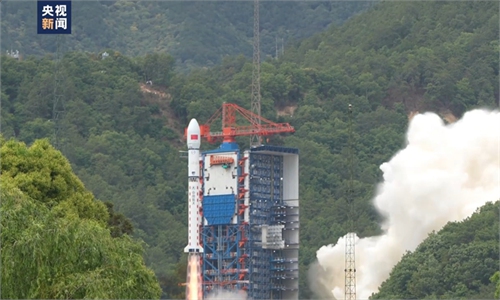
China successfully sent a new set of test satellites for internet technology into space from the Xichang Satellite Launch Center in the southwestern Sichuan Province on Friday.