UK businesses are actively discussing new investment opportunities in China, as British Prime Minister Keir Starmer is paying a visit. Several cooperation agreements have already been reached or in talk, the Global Times learned from corporate representatives at the China-UK ...
China hosts a star-studded summit to showcase its glowing influence
In this photo provided by Indian Prime Minister's Office, Indian Prime Minister Narendra Modi, left, and Chinese President Xi Jinping, right, hold a meeting on the sidelines of the Shanghai Cooperation Organization (SCO) summit in Tianjin, China Sunday, Aug. 31, 2025. (Indian Prime Minister's Office via AFP https://www.youtube.com/watch?v=ZfDuPX3p9Y0
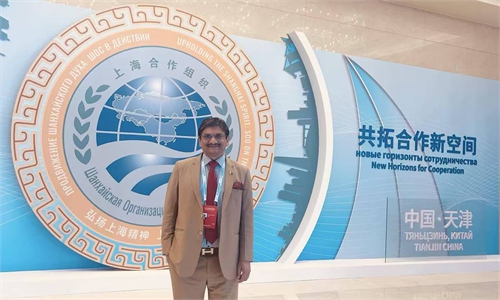
President Xi Jinping gathered the leaders of Russia and India among dignitaries from around 20 Eurasian countries for a showpiece summit aimed at putting China front and centre of regional relations.
Security was tight in the northern port city of Tianjin, where the Shanghai Cooperation Organisation (SCO) summit is being held until today, days before a massive military parade in the capital Beijing to mark 80 years since the end of World War II.
The SCO comprises China, India, Russia, Pakistan, Iran, Kazakhstan, Kyrgyzstan, Tajikistan, Uzbekistan and Belarus – with 16 more countries affiliated as observers or “dialogue partners”.
Russian President Vladimir Putin touched down in Tianjin yesterday with an entourage of senior politicians and business representatives.
Meanwhile, Xi held a flurry of bilateral meetings with leaders from the Maldives, Azerbaijan, Kyrgyzstan and one of Putin’s staunch allies, Belarusian President Alexander Lukashenko.
He also met India’s Prime Minister Narendra Modi, Xinhua news agency reported.
China and Russia have sometimes touted the SCO as an alternative to the Nato military alliance. This year’s summit is the first since US President Donald Trump returned to the White House.
In an interview published by Xinhua on Saturday, Putin said the summit will “strengthen the SCO’s capacity to respond to contemporary challenges and threats, and consolidate solidarity across the shared Eurasian space”.
“All this will help shape a fairer multipolar world order,” Putin said.
As China’s claim over Taiwan and Russia’s invasion of Ukraine have seen them clash with the United States and Europe, experts say that Beijing and Moscow are eager to use platforms such as the SCO to curry favour.
“China has long sought to present the SCO as a non-Western-led power bloc that promotes a new type of international relations, which, it claims, is more democratic,” said Dylan Loh, an assistant professor at Singapore’s Nanyang Technological University.
More than 20 leaders including Iranian President Masoud Pezeshkian and his Turkish counterpart Recep Tayyip Erdogan are attending the bloc’s largest meeting since its founding in 2001.
“The large-scale participation indicates China’s growing influence and the SCO’s appeal as a platform for non-Western countries,” Loh added.
Beijing, through the SCO, will try to “project influence and signal that Eurasia has its own institutions and rules of the game”, said Lizzi Lee from the Asia Society Policy Institute.
“It is framed as something different, built around sovereignty, non-interference, and multipolarity, which the Chinese tout as a model,” Lee said.
Putin needs “all the benefits of SCO as a player on the world stage”, said Lim Tai Wei, a professor and East Asia expert at Japan’s Soka University. — AFP
After 24 years of robust development, the Shanghai Cooperation Organization (SCO) has emerged as a significant player on the global stage, gaining increasing recognition and influence. The organization has just concluded its largest-ever annual summit in North China's Tianjin on Monday, where a slew of key documents, including a development ...
The SCO has not only inherited and advanced the multilateral framework represented by the UN but has also innovated and reshaped its concepts and pathways under new circumstances. The SCO has become both a staunch defender and a benchmark practitioner of multilateralism at a time when this principle of international engagement is under severe erosion worldwide.
14 hours ago — The aircraft carrying the Prime Minister and his wife Datuk Seri Dr Wan Azizah Wan Ismail landed at the Tianjin Binhai International Airport.
In accord: Xi and Anwar after witnessing a fruitful Exchange of Agreement session between the two countries at Seri Perdana on April 16. — AP
WHEN Chinese President Xi Jinping returned to Malaysia recently for a state visit after more than a decade, it must have been a nostalgic moment for the leader, as much has changed for him, Malaysia, and China in the past 12 years.
Nostalgia often invokes positive emotions, offering a sense of continuity, meaning, and connection. I believe Xi felt this with Malaysia during his recent visit, and it was evident in his opening remarks at a bilateral meeting with Prime Minister Datuk Seri Anwar Ibrahim.
“This marks my return to Malaysia after 12 years, during which the nation has achieved remarkable progress in its development. Your Madani Government is steadily becoming a promising reality, and I extend my heartfelt congratulations,” Xi said.
Reflecting on the rich tapestry of historical ties between the two nations, Xi recalled the legendary voyages of Admiral Zheng He to Melaka in the 15th century, and the establishment of modern diplomatic relations over five decades ago in defiance of Cold War tensions at the time.
“Today, our two countries are working in unity to jointly build a community with a shared future. China-Malaysia relations are entering a new golden era,” he said, highlighting the deepening friendship between the two countries.
Building networks
Xi’s visit was relatively subdued this time, reflecting the current complexities China is facing, particularly in light of US tariffs and sanctions.
However, the underlying theme of resilience and strategic diplomacy was apparent.
Invited by His Majesty Sultan Ibrahim, the King of Malaysia, Xi’s presence from April 15 to 17 highlighted China’s determination to maintain and strengthen international relationships despite mounting external pressures.
The US measures aim to limit China’s technological advancements and limit its influence in key economic sectors. In response, China has chosen to demonstrate its resilience by strengthening ties with strategic partners like Malaysia. The timing of the visit, just days after the US announced new tariffs, seems very much a calculated move to showcase China’s ability to navigate these economic challenges.
By reinforcing partnerships in South-East Asia, China is diversifying its economic alliances and sending a message of defiance in the face of American attempts to isolate it on the global stage.
Xi’s visit highlighted China’s strategy of building robust trade networks outside Western influence, reducing vulnerability to unilateral economic pressures.
China’s resilience is also evident in its pursuit of long-term goals. Despite immediate economic challenges, China continues to invest heavily in initiatives such as the Belt and Road Initiative, aiming to create a vast network of trade routes and partnerships across Asia, Africa, and Europe.
For China, these efforts are not just about economic survival but also about asserting sovereignty and strategic autonomy, resisting external attempts to dictate its policies.
‘Fierce independence’
Back home, Malaysia is also demonstrating resilience and strategic foresight by embracing this opportunity to solidify ties with China.
Anwar, long an advocate of Malaysia’s non-aligned policy, reiterated the country’s commitment to maintaining a balanced approach in international relations.
In his official visit to Australia to meet Prime Minister Anthony Albanese last year, Anwar emphasised Malaysia’s “fierce independence” and the country’s intention to choose its own friends, countering any China-phobic sentiment.
This stance reiterates Malaysia’s policy of not taking sides in global power struggles – a wise move for a nation that relies heavily on trade with both China and the United States.
Deputy Prime Minister Datuk Seri Dr Ahmad Zahid Hamidi, who celebrated the day of the 50th anniversary of Malaysia-China diplomatic relations in Beijing with Chinese Premier Li Qiang and other leaders last year, also noted in recent commentary that “Malaysia believes the world cannot be built on harmful competition”.
“Instead, we must forge cooperation based on mutual trust, mutual respect, and mutual unity.
“That is Malaysia’s principle – negotiating, not retaliating; opening doors, not building walls that isolate and diminish global cooperation,” he said, highlighting Malaysia’s firm stance in rejecting retaliation and emphasising mutual trust and respect in international relations.
Initiatives adopted
Xi’s visit resulted in significant outcomes, including the signing of 31 memoranda of understanding covering a wide range of sectors, from infrastructure to digital transformation. One of the highlights included expanding the “Two Countries, Twin Parks” initiative, set to drive high- impact investments and bolster Malaysia’s position in the Industrial Revolution 4.0 era.
Part of the initiatives include developing the Malaysia-China Halal Food Industrial Park on 60ha of land in Perak, leveraging Malaysia’s prestigious international halal certification system and China’s food processing experience and supply chain management. With this, Malaysia’s halal industry will certainly shine further globally.
Also, the establishment of educational institutions like Xiamen University Malaysia and the planned expansion of Universiti Malaya in Shandong, China, are testaments to the deepening educational and cultural ties between the two nations.
These initiatives, along with cooperation in artificial intelligence and the digital economy, mark a step forward in human capital development, crucial for Malaysia’s future economic competitiveness.
Students from the National Academy of Arts, Culture and Heritage welcoming the Chinese President. — Bernama
Balancing ties
As Malaysia continues in the role of Asean Chair this year, it’s crucial to strengthen the Asean Plus Three (APT) framework to make the region more resilient against external threats, like recent global tariffs and sanctions.
APT refers to the cooperative framework between the 10 Asean member countries and China, Japan and South Korea. It started in December 1997 and has evolved into a key mechanism for promoting East Asian cooperation, with Asean serving as the driving force.
Improving APT cooperation can boost economic ties, strengthen financial markets, and drive technological progress across the region. By building on initiatives like the Chiang Mai Initiative Multilateralisation – a key financial cooperation initiative within the APT – and working together on digital and climate issues, the APT can provide a strong safety net and support sustainable growth.
For Malaysia, leading this effort brings great advantages. Increased trade and investment within the APT can boost Malaysia’s economy and technological growth, creating jobs and supporting development.
As the Asean Chair, Malaysia has a unique chance to influence the regional agenda, increasing its influence while promoting cultural and personal connections. By leading this initiative, Malaysia can strengthen its economic and political position, helping the region thrive despite global challenges.
As Malaysia continues to balance its ties with both China and the US, it proves the strength of diplomacy and the pursuit of shared prosperity in a world often divided by competition and conflict. Xi’s visit not only strengthened the existing partnership but also paved the way for future collaborations that will benefit Malaysia and China, and the wider region.- Sunday Star By ALLISON LAI
Malaysia sees surge in Chinese students
Photo: ART CHEN/The Star
PETALING JAYA: The number of students from China applying to study in Malaysian universities grew by 25% last year, driven by a shift in global student mobility. Education Malaysia Global Services (EMGS) said international students, including from China, are shifting away from the world’s ‘Big Four’ study destinations: the UK, US, Australia and Canada.
“More students are exploring dynamic and diverse destinations across Asia. Malaysia is one of the top destinations,” it told The Star.
EMGS, which is under the purview of the Higher Education Ministry, said its data shows that students from China continued to top the list of study applications to Malaysia, at 33,216 in 2024, compared to 26,627 applications in 2023.
Other top applications came from Bangladesh (6,917), Indonesia (5,556), India (2,591) and Pakistan (2,417).
From January to March this, application by students from China continued to grow by 2%, rising to 5,876 from 5,780 in the same period last year.
EMGS said Malaysia’s multilingual environment, political stability, safety, as well as rich cultural experiences, are motivating factors for China students to pursue their studies in the country.
“Malaysia's geographical proximity to China also makes it easier and more affordable for students to travel back home during holidays and maintain close ties with their families.”
China Daily recently reported that more Chinese families are reconsidering higher education plans in the US due to worsening bilateral relations and growing concerns over safety abroad.
Parents, the report said, are considering countries that have a good relationship with China as political stability ensures the safety of their children abroad.
The report also indicated that data from the 2024 Open Doors Report on Inter¬national Educational Exchange showed that China was surpassed by India as the largest source of international students in the United States for the 2023-2024 academic year.
There were 277,398 students from the Chinese mainland enrolled in US higher education institutions during that period, a figure that has been dropping annually since peaking at 372,532 in the 2019-2020 academic year.
EMGS said Malaysia, under the Education Blueprint 2015-2025, is targeting 250,000 international students by 2025 with 39% contributed by China.
“The consistent rise in international student applications, along with a student-friendly visa system, reflects Malaysia’s commitment to transforming into a global classroom and strengthening its global influence and soft power,” said EMGS.
It added that Malaysia offers internationally recognized degrees, often in partnership with prestigious universities from the UK, Australia, and the US, allowing students to earn a reputable degree at a fraction of the cost.
“The qualification from Malaysia is also widely-recognised and highly regarded in China so students are able to find jobs easily after graduation.”

 To better relations: Xi and Starmer shaking hands before their meeting at the Great Hall of the People in Beijing. — Pool/AFP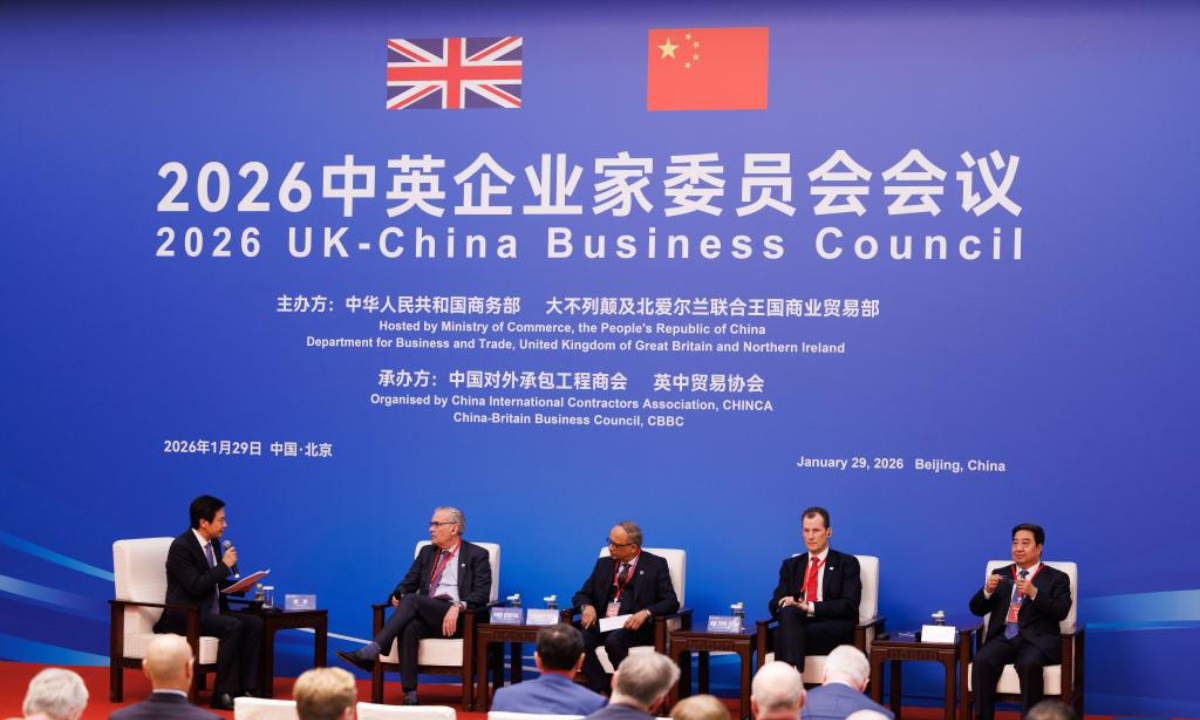




.svg.webp)