Pages

Saturday, December 20, 2025

18 bankruptcies recorded each day


PETALING JAYA: On paper, earning RM7,000 a month as an assistant engineer should offer a comfortable life. But for Mohd Amir Izzuddin, it barely covers the essentials.

With loans and credit card debts exceeding RM150,000, more than 85% of his income is swallowed up by repayments, leaving little room for savings or unexpected expenses.
CLICK TO ENLARGECLICK TO ENLARGE

Not all of Mohd Amir’s debts stem from poor decisions. Raised in a village, he grew up believing that a degree and hard work would be his ticket to a modestly better life.

“We’re always told to study and work hard to live better. That’s exactly what I did. So is it really wrong for me to choose a higher-end car and a studio apartment or to enjoy a nice premium steak or seafood platter twice a month? Is life supposed to be so bland, only rewarding us when we’re too old or sick to enjoy our savings?” he said.

Mohd Amir also supports his parents, providing them with a monthly allowance to help cover their expenses and medical bills.

ALSO READ: Think before you swipe, experts tell youths

“They don’t work and have no pension. I give what I can, but it is never enough with the rising cost of living. A proper meal nowadays costs no less than RM12 and my monthly expenses for food exceed RM1,500,” he said.

Now at 35, and more than a decade into his career, Amir regrets that he’s still struggling to stay financially afloat.

“Every month is a battle with the bills. I have no choice but to rely on credit cards, personal loans and BNPL (Buy Now, Pay Later) offers to manage my expenditure since these facilities are very easily available,” he said.

The financial stress has also affected his personal life.

“I have chosen to remain single until I feel financially stable. If I had my own family, they might have to skip meals with the kind of expenses I face monthly,” he said.

Communications executive Arthur Lim, 45, learned firsthand how debt can bring heartache after watching his colleagues sink into financial trouble during his 20s.

“Loans are a huge and profitable business. Those offering them will naturally promote and entice people, but repayment is where the problem begins,” he said.

Lim pointed out that vehicle financing can be particularly costly, adding that an RM120,000 car loan repaid over nine years could result in almost RM100,000 in losses when both depreciation and interest are taken into account.

“Yet some earning under RM4,000 still take the plunge just to look cool. I’m puzzled how these loans were approved when borrowers had other commitments such as home or personal loans.

“There are unscrupulous loan agents who facilitate these huge borrowings for those with low income,” he said.

Lim said he only has a home loan which he took out a decade ago and was relieved to know that the value of his house has appreciated by almost 80%.

For A. Kevin, who is in his 30s, paying off his loans consumes nearly 90% of his RM6,500 income each month, despite his efforts to be thrifty.

He said that as a content creator, a significant portion of his income also goes toward computers, smartphones and the latest software.

“I studied hard and earned a degree, but I feel like I am living like a low-income earner,” said Kevin, adding that he was fortunate his wife’s income helps supplement the household expenditure.

Bank Negara Malaysia’s Credit Counselling and Debt Management Agency (AKPK) told The Star yesterday that credit card debt remains the main reason why most individuals struggle to keep up with their financial obligations.

Since 2006, more than 1.4 million Malaysians have approached AKPK for assistance in managing and recovering from their debts.

According to the Finance Ministry, Malaysian households owed a combined RM54.9bil in credit card and BNPL debt as of September 2025, highlighting the growing reliance on short-term and revolving credit to manage daily expenses.

The pressure has become so intense that it is now spilling over into rising bankruptcy cases.

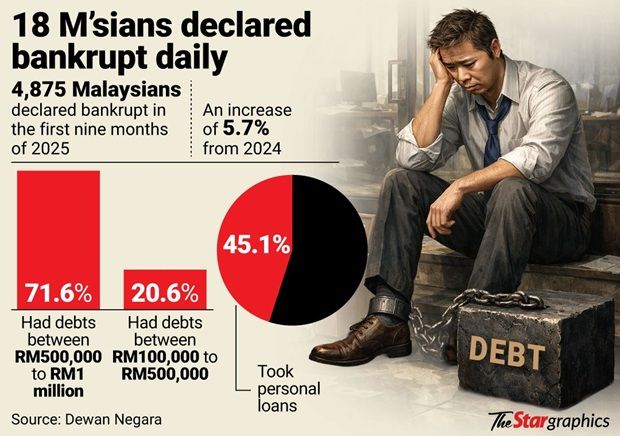
Earlier this month, during a debate on the Supply Bill 2026 at the Dewan Negara, Senator Datuk Sivaraj Chandran revealed that an average of 18 bankruptcy cases are reported daily in Malaysia, with nearly 60% involving individuals under the age of 30.

He said that between January and September 2025, a total of 4,875 Malaysians were declared bankrupt – a 5.7% increase compared to the same period in 2024.

Sivaraj was also reported to have revealed that about 71.6% of those declared bankrupt owed between RM500,000 and RM1mil, while another 20.6% carried debts of RM100,000 to RM500,000.

Contrary to common belief, it wasn’t housing or business loans, but personal loans and credit card expenses that were the main contributors – accounting for about 45.1% of bankruptcy cases.

Although many people assume that loan approvals are handed out too easily, a senior banker says the process is actually much more stringent than it appears.

Senior economist Mohd Afzanizam Abdul Rashid said that banks generally rely on the Central Credit Reference Infor­mation System (CCRIS) when assessing loan applications, paying particular attention to a borrower’s repayment behaviour over the past 12 months.

“Any arrears will reduce the applicant’s credit score, and the lower the score, the slimmer the chances of approval. At worst, the application may be rejected,” he said.

Afzanizam added that CCRIS reports also allow banks to see how many financing facilities an applicant has applied for across different banks, even if those applications haven’t been approved yet.

Existing loans that have been restructured or rescheduled are also clearly indicated in the report.

“All these factors influence the credit score,” he said. “Borrowers who are already heavily indebted face extremely low chances of securing new financing. In such cases, applying for additional credit is likely to result in outright rejection.”

Related stories:

Wednesday, December 17, 2025

Malaysia PM Anwar makes sweeping Cabinet changes, including new trade and economy ministers

 The premier announced more than 25 changes to his Cabine

 These are results for THE UNITY CABINET 2025,

Search instead for THE UNITYT CABINET 2025,

The premier announced more than 25 changes to his Cabinet after previously saying that a major reshuffle was not on the cards.

Anwar Announces 28 Appointments, Portfolio Changes


Malaysia Prime Minister Anwar Ibrahim shows a list of his Cabinet appointments after announcing a reshuffle on Dec 16, 2025. (Photo: Prime Minister’s Office of Malaysia/Afiq Hambali)

KUALA LUMPUR: Malaysian Prime Minister Anwar Ibrahim announced sweeping changes to his Cabinet on Tuesday (Dec 16), ending weeks of speculation over ministerial vacancies.

Notable changes - among more than 25 announced - include the appointments of United Malays National Organisation (UMNO) stalwart Johari Ghani as the new Investment, Trade and Industry Minister and Parti Keadilan Rakyat’s (PKR) Akmal Nasir as Economy Minister. There are 65 Cabinet posts in total. 

Johari was previously Minister for Plantations and Commodities while Akmal was Deputy Minister of Energy Transition and Water Transformation. 

A composite image of newly-appointed investment, trade and industry minister Johari Ghani (left) and economy minister Akmal Nasir (right). (Photos: Facebook/Johari Abdul Ghani, Facebook/Akmal Nasir)

During the internal PKR polls in May, Akmal was seen as closely aligned to Rafizi Ramli, who resigned as Economy Minister after he was defeated by Anwar’s daughter Nurul Izzah in a contest to be the party’s deputy president. 

UMNO is an ally of Anwar’s Pakatan Harapan (PH) ruling coalition, and the investment, trade and industry portfolio was previously held by Tengku Zafrul Aziz, who was an UMNO member before leaving the party to join the prime minister’s PKR. 

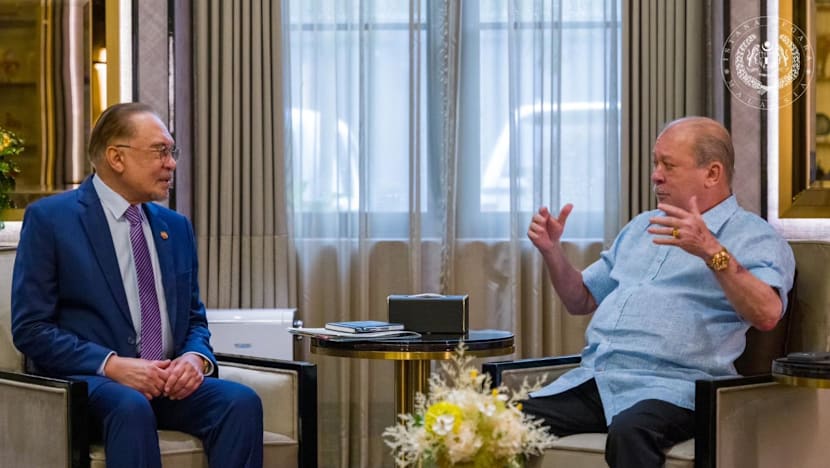
Malaysia Prime Minister Anwar Ibrahim held a meeting with Malaysian king Sultan Ibrahim Sultan Iskandar at Istana Bukit Tunku in Kuala Lumpur on Dec 16, 2025. (Photo: Facebook/Sultan Ibrahim Sultan Iskandar)

Speaking at the start of the press conference before he announced the changes, Anwar said: “There is a need to make some changes so that we have a Cabinet that works as a team, to focus on achieving higher economic growth and solving people's problems.” 

He had met the king Sultan Ibrahim Sultan Iskandar on Tuesday morning, and said in a Facebook post in the afternoon that he would make an announcement on the Cabinet at 3.30pm that day.

Among the changes he announced, Arthur Josep Kurup of the United Sabah People’s Party was appointed Natural Resources and Environmental Sustainability Minister, PKR vice-president R Ramanan was appointed Human Resources Minister while head of UMNO women’s wing Noraini Ahmad was appointed Minister for Plantations and Commodities. 

Democratic Action Party’s (DAP) Hannah Yeoh was reassigned from her Minister for Youth and Sports portfolio to be Minister in the Prime Minister’s Department (Federal Territories), with PKR’s Taufiq Johari taking her place.   

PKR’s Mustapha Mohd Yunus Sakmud was appointed Minister for Sabah and Sarawak while DAP’s Steven Sim was reassigned from his Human Resources portfolio to be Minister for Entrepreneur Development and Cooperatives. 

Senator and Islamic scholar Zulkifli Hasan was appointed Minister for Religious Affairs. 

The changes to Anwar’s Cabinet - including full minister and deputy minister positions - saw some members being reassigned while others were new appointments. 

Full ministers who were dropped completely from the line-up included PKR’s Zaliha Mustafa who was Minister in the Prime Minister’s Department (Federal Territories) and Minister for Religious Affairs Mohd Na’im Mokhtar. 

Na'im's exclusion was a surprise as he was sworn in as a senator for a second term on Dec 3. 

Notably, Malaysia's Education Minister Fadhlina Sidek retained her post despite facing criticism for her perceived lack of action and slow response on serious school issues like bullying, with student deaths triggering public outcry for her to resign. 

Earlier this month, three ministers were also sworn in as senators for a second term. Besides Na'im, they included Home Minister Saifuddin Nasution Ismail and Higher Education Minister Zambry Abdul Kadir. 

A minister in Malaysia must be an elected member of parliament (MP) in the lower house or an appointed senator in the upper house. 

On Dec 1, Anwar had said that a major reshuffle of his Cabinet is not on the cards, noting that his administration will “only function for a year plus” as Malaysia’s next general election is due by February 2028. 

However, there was speculation that changes to his Cabinet were imminent, with Tengku Zafrul stepping down from his Investment, Trade and Industry Minister portfolio earlier this month, creating a fourth ministerial vacancy. 

Tengku Zafrul had served for two terms as a senator since 2020. He held the trade minister post throughout his term in the Senate, which is the maximum period allowed.

Nik Nazmi Nik Ahmad had resigned as the Natural Resources and Environmental Sustainability Minister in May, while Ewon Benedick resigned as the Entrepreneur Development and Cooperatives Minister in November, ahead of the Sabah state elections.

Ewon had resigned over disagreements with the federal government on issues related to Sabah’s 40 per cent entitlement of federal net revenue derived from the state. 

Former trade minister Tengku Zafrul Abdul Aziz on his last day in the Dewan Rakyat. (Photo: Instagram/@tzafrul_aziz)

Meanwhile, like Rafizi, Nik Nazmi had resigned following defeat in party elections within PKR.

Second Finance Minister Amir Hamzah took over the economy portfolio in the interim while Johari Ghani helped to handle natural resources and environment sustainability.

Ewon’s former portfolio was being managed by works minister Alexander Nanta Linggi starting Dec 3, local media reported.

t after previously saying that a major reshuffle was not on the cards.

Anwar Announces 28 Appointments, Portfolio Changes


Malaysia Prime Minister Anwar Ibrahim shows a list of his Cabinet appointments after announcing a reshuffle on Dec 16, 2025. (Photo: Prime Minister’s Office of Malaysia/Afiq Hambali)

KUALA LUMPUR: Malaysian Prime Minister Anwar Ibrahim announced sweeping changes to his Cabinet on Tuesday (Dec 16), ending weeks of speculation over ministerial vacancies.

Notable changes - among more than 25 announced - include the appointments of United Malays National Organisation (UMNO) stalwart Johari Ghani as the new Investment, Trade and Industry Minister and Parti Keadilan Rakyat’s (PKR) Akmal Nasir as Economy Minister. There are 65 Cabinet posts in total. 

Johari was previously Minister for Plantations and Commodities while Akmal was Deputy Minister of Energy Transition and Water Transformation. 

A composite image of newly-appointed investment, trade and industry minister Johari Ghani (left) and economy minister Akmal Nasir (right). (Photos: Facebook/Johari Abdul Ghani, Facebook/Akmal Nasir)

During the internal PKR polls in May, Akmal was seen as closely aligned to Rafizi Ramli, who resigned as Economy Minister after he was defeated by Anwar’s daughter Nurul Izzah in a contest to be the party’s deputy president. 

UMNO is an ally of Anwar’s Pakatan Harapan (PH) ruling coalition, and the investment, trade and industry portfolio was previously held by Tengku Zafrul Aziz, who was an UMNO member before leaving the party to join the prime minister’s PKR. 

Malaysia Prime Minister Anwar Ibrahim held a meeting with Malaysian king Sultan Ibrahim Sultan Iskandar at Istana Bukit Tunku in Kuala Lumpur on Dec 16, 2025. (Photo: Facebook/Sultan Ibrahim Sultan Iskandar)

Speaking at the start of the press conference before he announced the changes, Anwar said: “There is a need to make some changes so that we have a Cabinet that works as a team, to focus on achieving higher economic growth and solving people's problems.” 

He had met the king Sultan Ibrahim Sultan Iskandar on Tuesday morning, and said in a Facebook post in the afternoon that he would make an announcement on the Cabinet at 3.30pm that day.

Among the changes he announced, Arthur Josep Kurup of the United Sabah People’s Party was appointed Natural Resources and Environmental Sustainability Minister, PKR vice-president R Ramanan was appointed Human Resources Minister while head of UMNO women’s wing Noraini Ahmad was appointed Minister for Plantations and Commodities. 

Democratic Action Party’s (DAP) Hannah Yeoh was reassigned from her Minister for Youth and Sports portfolio to be Minister in the Prime Minister’s Department (Federal Territories), with PKR’s Taufiq Johari taking her place.   

PKR’s Mustapha Mohd Yunus Sakmud was appointed Minister for Sabah and Sarawak while DAP’s Steven Sim was reassigned from his Human Resources portfolio to be Minister for Entrepreneur Development and Cooperatives. 

Senator and Islamic scholar Zulkifli Hasan was appointed Minister for Religious Affairs. 

The changes to Anwar’s Cabinet - including full minister and deputy minister positions - saw some members being reassigned while others were new appointments. 

Full ministers who were dropped completely from the line-up included PKR’s Zaliha Mustafa who was Minister in the Prime Minister’s Department (Federal Territories) and Minister for Religious Affairs Mohd Na’im Mokhtar. 

Na'im's exclusion was a surprise as he was sworn in as a senator for a second term on Dec 3. 

Notably, Malaysia's Education Minister Fadhlina Sidek retained her post despite facing criticism for her perceived lack of action and slow response on serious school issues like bullying, with student deaths triggering public outcry for her to resign. 

Earlier this month, three ministers were also sworn in as senators for a second term. Besides Na'im, they included Home Minister Saifuddin Nasution Ismail and Higher Education Minister Zambry Abdul Kadir. 

A minister in Malaysia must be an elected member of parliament (MP) in the lower house or an appointed senator in the upper house. 

On Dec 1, Anwar had said that a major reshuffle of his Cabinet is not on the cards, noting that his administration will “only function for a year plus” as Malaysia’s next general election is due by February 2028. 

However, there was speculation that changes to his Cabinet were imminent, with Tengku Zafrul stepping down from his Investment, Trade and Industry Minister portfolio earlier this month, creating a fourth ministerial vacancy. 

Tengku Zafrul had served for two terms as a senator since 2020. He held the trade minister post throughout his term in the Senate, which is the maximum period allowed.

Nik Nazmi Nik Ahmad had resigned as the Natural Resources and Environmental Sustainability Minister in May, while Ewon Benedick resigned as the Entrepreneur Development and Cooperatives Minister in November, ahead of the Sabah state elections.

Ewon had resigned over disagreements with the federal government on issues related to Sabah’s 40 per cent entitlement of federal net revenue derived from the state. 

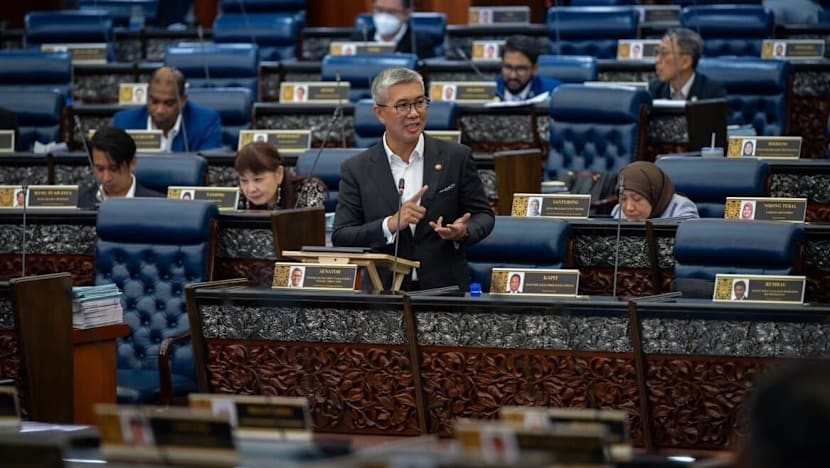
Former trade minister Tengku Zafrul Abdul Aziz on his last day in the Dewan Rakyat. (Photo: Instagram/@tzafrul_aziz)

Meanwhile, like Rafizi, Nik Nazmi had resigned following defeat in party elections within PKR.

Second Finance Minister Amir Hamzah took over the economy portfolio in the interim while Johari Ghani helped to handle natural resources and environment sustainability.

Ewon’s former portfolio was being managed by works minister Alexander Nanta Linggi starting Dec 3, local media reported.