Pages

Showing posts with label China rise. Show all posts

Wednesday, December 3, 2025

CPC in Global Eyes: CPC’s sustained spirit of hard work and self-reliance continues to drive Party forward: Nephew of Edgar Snow

Ties to cradle of  New Chin 

An aerial view of Yan'an, an old revolutionary base in Northwest China's Shaanxi Province. Photo: VCG


Editor's Note: 

Chinese President Xi Jinping has pointed out, "to understand China today, one must learn to understand the Communist Party of China (CPC)." With the rapid development of China's economy and society, and the steady advancement of Chinese path to modernization, the notable achievements of the CPC have drawn extensive international attention and scholarly interest. Against this backdrop, the Global Times has launched the "CPC in Global Eyes" column, focusing on the feelings, perspectives, and insights of international friends from various fields regarding the CPC's historical path and achievements.

They include those who have toured China; deeply study CPC in academic fields; work, live, study, seek employment, or do business in various fields in China; and who, though having not visited China in person, pay close attention to the CPC's policies and trends. Through their vivid personal experiences, we aim to present a multifaceted overseas view of the CPC.

In the third installment of the series, we focus on Yan'an, a sacred place of the Chinese revolution and the cradle of New China in Northwest China's Shaanxi Province - where Edgar Snow, the US journalist who first made the CPC known to the world, conceived his world-renowned classic Red Star Over China based on months of firsthand observations and interviews with the CPC. We spoke with Eric Foster - Edgar Snow's nephew - to see how Snow family's descendants perceive the CPC, based on their continued connection and intergenerational observations of with China.
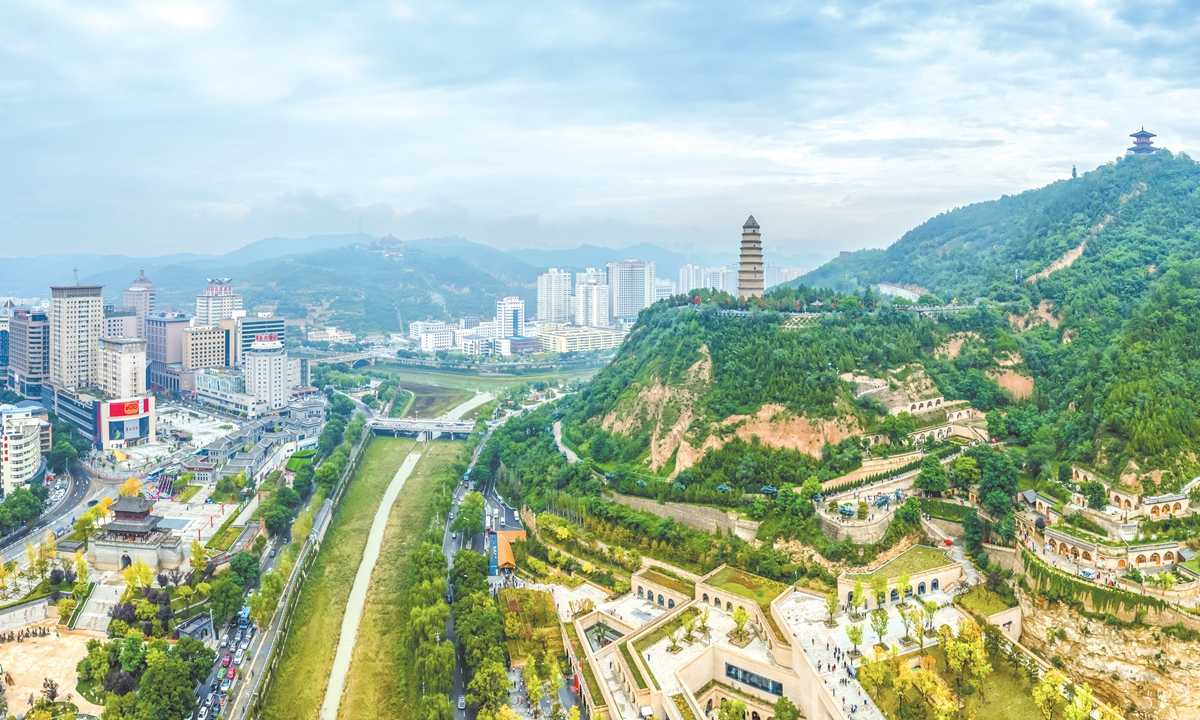
An aerial view of Yan'an, an old revolutionary base in Northwest China's Shaanxi Province. Photo: VCG

An aerial view of Yan'an, an old revolutionary base in Northwest China's Shaanxi Province. Photo: VCG

"I want to do what my aunt and uncle did, which was to introduce China to the world. I need to write a book, telling the true history about China to help whoever reads it in America or other western countries to see the real China. This is what I've been doing for the last 12 or 13 years," Eric Foster, the nephew of Edgar Snow and Helen Snow, said in an interview with the Global Times.

As the first Western reporter to enter Yan'an - which served as the CPC's headquarter from 1935 to 1948 - and the first to interview Chairman Mao Zedong and other CPC leaders, Edgar Snow provided a rare and firsthand account of China as opposed to the Kuomintang propaganda, challenging the world's misunderstandings and prejudices, with his reportage Red Star Over China based on extensive interviews and careful documentation he had conducted. 

In the book, Snow painted a picture of a resilient, promising China led by CPC leaders possessing outstanding qualities, what later became known as the Yan'an Spirit - calling for firmness in correct political orientation, emancipation of the mind, seeking truth from facts, serving the people wholeheartedly, and developing self-reliance while encouraging pioneering efforts.

As a direct descendant of Snow, Foster has not only inherited a profound connection with China, but has also taken up the family mission of building bridges between China and the world. Foster said he has seen how the very spirit and qualities of the CPC, which his uncle so vividly documented in Yan'an, are being carried forward and illuminated in the present day, demonstrating their enduring relevance.

Eric Foster holds up the book Red Star Over China by his uncle Edgar Snow. Photo: Courtesy of Eric Foster

Eric Foster holds up the book Red Star Over China by his uncle Edgar Snow. Photo: Courtesy of Eric Foster

Old path, same spirit

In Ganquan county, Yan'an, a winding path carries echoes of history. Rest stops and signs offer modern comfort, yet as the trail steepens, one feels transported to the 1930s - an era when the Red Army forged new bases through hardship and endurance.

This November, Eric Foster arrived there, setting foot on this very same path retracing his great-uncle Edgar Snow's journey to Yan'an - a return to "where his family's bond with China began."

From 1935 to 1948, the Shaanxi-Gansu-Ningxia Border Region centered around Yan'an was where the CPC Central Committee headquartered. It was in Yan'an where Party Central Committee and the Red Army kept fighting against Japanese forces invasion despite of military encirclement and economic blockade. Yan'an nourished the development of the CPC in strength, and supported the victory of the Chinese revolution. A generation of revolutionaries gathered in Yan'an amid relentless enemy blockades and harsh living conditions, tenaciously fought and steered the Chinese revolution from its low ebb to a historic turning point, paving the way for its eventual resurgence.   

Following this historic path, Foster arrived at the Bao'an Revolutionary Site Memorial Hall in Zhidan county, a modest complex of cave dwellings, carefully preserved and maintained, that once served as Chairman Mao's former residence and the very place where Edgar Snow first met Mao.

It was precisely through the many nights of conversation in this cave room that Snow came to understand the CPC's policies - including a national united front against Japan, and the Chinese Soviet Government's diplomacy and many others. And it was also in Yan'an that Snow witnessed CPC's true essence - a rising political force committed to serving the people through hard work and self-reliance. 

Running his hand over that small wooden, Foster reflected, "It is quite remarkable how simple life was. What came out of this simple room affected not only the history of China, but also the whole world."

From words to reality


Foster's visit to Yan'an is part of a documentary project that traces Snow family's ongoing dialogue with China. "This is a precious opportunity for me to contribute to telling the world China's real history, a history my family has been woven into across generations," he told the Global Times.  

After visiting revolutionary sites, Foster felt that his understanding of the CPC from distant accounts was transformed into tangible reality. 

Between 1941 and 1944, a large-scale production campaign transformed vast swathes of thorny no-man's land into productive terrain. The CPC-led local force converted wasteland into rice paddies, cave houses, and workshops, often using only rudimentary tools - or even their bare hands, according to the Xinhua News Agency.  

"This miraculous achievement came through the CPC's hard work and self-reliance, which constitute an important part of the Yan'an Spirit," said Foster. He noted that Snow's book vividly captured this spirit, portraying the CPC leaders in Yan'an: Patched clothes, simple meals of millet and stir-fried potatoes with peppers, earthen beds, and broken glasses tied with strings.

In the Yan'an Revolutionary Memorial Hall, Foster also observed an exhibition panel recording the CPC's Yan'an-era code of conduct-the "Ten Nos," including banning corruption, profiteering, and prostitution. "Seeing these artifacts have given me a deeper understanding of why the Yan'an Spirit holds such significance for the CPC. Each item here authentically documents the Party's practical explorations during the Yan'an period, reflecting their hard struggle and their commitment to serving the people wholeheartedly, "said Foster.

He added, "The core value of the Yan'an Spirit is a fundamental requirement that enabled CPC members to persevere through hardship and lead the revolution from low tide to triumph. It remains a precious spiritual treasure of the CPC."

A view of the Zaoyuan revolutionary site in Yan'an, Northwest China's Shaanxi Province Photo: VCG

A view of the Zaoyuan revolutionary site in Yan'an, Northwest China's Shaanxi Province Photo: VCG

Inherited spirit, continuous effort

As a direct descendant of the Snow family, Foster has long been dedicated to promoting China-US cultural exchanges and narrating the true story of China and its ruling party to the world.

"When I was young, my mother often spoke of my famous uncle in China, so visiting became a dream. I've long tried to understand today's China, yet Western sources often offered only old images - blue uniforms and handcarts - so different from the modern Beijing I finally saw," Foster told the Global Times. 

Now, having spent more than 10 years settling down in China, Foster has become the firsthand witness to the CPC's unwavering commitment to serving the people wholeheartedly and persevering with a self-reliant and hard-working entrepreneurial spirit while leading the nation's modernization drive. 

From his experience, the nationwide poverty-alleviation campaign stands as the most powerful testament to the CPC's continued commitment to hard work and wholeheartedly serving the people. 

"I live in Beijing and have seen its prosperity. It would be easy to focus only here, yet the Party dedicated immense effort to the rural front. Countless members worked in harsh conditions to develop local industries, ultimately lifting nearly 800 million people out of poverty. This is the Yan'an Spirit, alive today," he said.

"The Yan'an Spirit represents an important time of struggle in China's developing history," said Foster, noting that the CPC has preserved the spirit of hard work and self-reliance and passed it to next generations, turning it into a valuable spiritual asset that drives their continuous efforts.

To Foster and many other overseas scholars, upholding and carrying forward the spiritual legacy of the Yan'an revolutionary period remains a source of strength for the CPC in its continuous progress. "Yan'an played a key role in helping China to become the new China that we have today," Foster said. 

After visting Yan'an, Foster deeply felt that those revolutionary memorial halls in Yan'an, together with many other patriotic-themed sites across China, has become a vivid window through which people from other countries can gain an authentic, multi-dimensional understanding of the CPC and China. 

"For today's new generation of global visitors who want to discover China and understand the CPC without previous lens of preconception, these sites matter a lot," Foster told the Global Times. "Visitors are able to feel, in an almost immersive way, the CPC's consistent dedication into serving the people and sustained spirit of hard work and self-reliance, which rooted in the Yan'an period and the Yan'an Spirit, and continues to drive the Party forward today." -By Zhao Jingru , Global Times

Friday, January 12, 2024

CES offers glimpse of how Chinese tech goes global


A view of the west hall of Las Vegas Convention Center in the US on January 8, 2024 Photo: VCG

The biggest driving force behind China's progress in chip industry comes from the US blockade


Even as geopolitical tension remains a risk factor that global industry chains can hardly ignore, Chinese tech companies are making a comeback at this week's 2024 Consumer Electronics Show (CES) in Las Vegas, the US, a reminder that Chinese manufacturing's technological innovation will continue to march toward global markets.

As a platform known for showcasing cutting-edge technology from companies all over the world, exhibits at the CES capture global trends in the consumer electronics industry, which has evolved from personal computers and smartphones to wearables, virtual reality devices, new-energy vehicles, autonomous-driving technology and artificial intelligence over the years.

Chinese tech companies have become important forces at the CES, impressing attendees with innovative products and technological applications. According to the US Consumer Technology Association, the CES 2024 attracted over 4,000 exhibitors from more than 150 countries and regions.

At least 1,100 are from China, more than double the number last year.

Unsurprisingly, the return of Chinese tech companies drew a lot of attention at this year's CES with their new launches and novel products, including the latest AI-integrated apps and devices, smart cars and high-end displays.

Each year, the CES gives the world a glimpse into Chinese tech companies' advances and innovation strength, and the increased number of Chinese exhibitors and their cutting-edge tech products highlight the continuous development of Chinese manufacturing.

Many Chinese exhibits represent the direction of industries where Chinese players hold advantages, such as electric vehicles.

The development shows that despite US sanctions and containment, Chinese manufacturing has still managed to take an important position in global industry chains, with some Chinese manufacturers even able to compete with American peers in some areas.

If anything, US pressure has strengthened the resolve of Chinese companies to seek their own technological and business breakthroughs.

Even companies such as telecommunication giant Huawei, dronemaker DJI and some semiconductor firms that are missing from the CES due to US sanctions haven't slowed their pace in pursuing technological progress and market expansion. For instance, as the world's leading provider of telecommunication technology solutions, Huawei has become a global giant in terms of 5G, cloud computing and other fields, with businesses covering more than 170 countries and regions.

From another perspective, the absence of Huawei and DJI highlights how fiercely China and the US are competing for the future of global markets, and the absence of the world's leading companies also shows that the CES doesn't present the world's leading technologies as objectively and truthfully as it used to, a sign of the waning glow of American manufacturing and the American market.

Meanwhile, it is emerging technological advances that have provided strong support for the transformation and upgrading of Chinese manufacturing, which has become increasingly competitive in the global market. With outstanding advantages of technological innovation, more and more Chinese tech companies have seen new development opportunities and accelerated their expansion in the global markets.

Moreover, the competitiveness of Chinese manufacturing in the global markets lies not only in technology innovation, but also in the efficiency of industry and supply chains. For a long time, China's complete and mature industry chain has provided stable production capacity and supply capacity for Chinese manufacturing, helping lower production costs and improving products' competitiveness.

Chinese technology companies still face many challenges as they seek to expand their reach in global markets. Chinese manufacturing is at a crucial juncture of seeking breakthroughs in technological innovation and also international economic and technological cooperation.

Due to the uncertainties of the global political and economic environment and the rise in trade protectionism in the US and Europe, Chinese manufacturing is bound to face tough challenges when it comes to going global and consolidating its position in the global industry chain. Chinese companies need to be fully prepared for what's to come and have a firm determination to resist external pressure.

\

Making a comeback: People visiting an exhibit during the gadget extravaganza in Las Vegas. About 500 of the 3,500 exhibitors at the CES are from China, more than last year but still not at pre-Covid numbers. — AFP

Las Vegas: Xiaoyu Fan smiled as she looked around a bustling China Pavilion at the Consumer Electronics Show (CES) Wednesday as gadgets like bladeless fans were displayed and deals were being made.

Hundreds of Chinese companies were at the annual CES gadget extravaganza, shrugging off US-China political trade tensions and focusing on taking care of business.“I believe all the people in each country are very good, the civilisation of each country is very nice, very friendly,” said Fan, who was with the Zhejiang Crossbow Brand Electric Appliance Co from Wuyi, China.

“We don’t care about the governments; that’s not our business” she added, a necklace around her neck spelling out the word “peace.”

About 500 of the 3,500 or so exhibitors at CES are from China, more than last year but still not at pre-Covid numbers, according to the Consumer Technology Association that runs CES.

“The Chinese are back,” association president Gary Shapiro said in the lead-up to the Las Vegas show that ends today.

Chinese titans like TCL and Hisense dazzled CES goers with stunning televisions while less well-known companies showed off robots, drones, electronic bikes, charging cables and much more.

TCL’s partnership with the US National Football League was the main theme at a CES press event, complete with appearances by sports legends.

“They certainly seemed like a red-blooded American company that drinks beer and watches football,” said Techsponential analyst Avi Greengart.

Chinese business leaders at CES included Appotronics chief executive Li Yi, whose company specialises in laser display technology used by major companies including car makers BMW and BYD.

To Li, it seemed tension between the United States and China on the trade front was beginning to stabilise, and that the issue was more a battle over high technology than the type of consumer tech packing CES.“For Chinese brands, being in the United States is tough in today’s climate,” Li acknowledged to AFP.

“But there is also an emerging opportunity; components technology companies are starting to see this as a chance to emerge.”

Chinese companies at CES played up innovation, wanting their country to be seen as a technology leader rather than just a place where things can be made cheaply.

“People typically think we are a manufacturing powerhouse, and then people think we are copycats,” Li said of attitudes towards Chinese entrepreneurs.

“There are still probably people doing that, but more companies like us are trying to be innovative; we really don’t want to reinvent the wheel and sell it at a lower price.”

Futurum Group research director Olivier Blanchard saw advanced computer chips used for artificial intelligence (AI) as the heart of trade friction between the United States and China.

That technology is a far cry from what is used in the cornucopia of AI-infused gadgets at CES from pet trackers to smart beds, baby bottles and electric bicycles.

“The whole the United States versus China thing takes a very distant backseat to the dialogue that happens at CES,” Blanchard said.

“Whether you’re from China or from anywhere else, if you have a good product you’re gonna find the market.”

Despite political tensions between the United States and China in regard to AI, national security and Taiwan, it would be unwise to decouple the two economies since they benefit so much from each other, according to Blanchard.

“I love the fact that they keep coming here every year, whether they’re from China or anywhere else, and they keep trying,” Blanchard said.

“It’s this weird churning layer of startups that are all competing to become the next big thing.” — AFP


Related:


Learn Chinese


Thursday, July 21, 2022

Participating in the military conflict in the Taiwan Straits will only mean suicide for US troops, Don’t say we didn’t warn you

Tension escalates hours ahead of Pelosi's potential Taiwan visit as PLA remains ...

The intensity of the situation across the Taiwan Straits has drastically escalated as the military deployment from the Chinese mainland, ...

China sternly warns Biden admin not to arrange Pelosi's visit to Taiwan, ... The Chinese Foreign Ministry and the People's Liberation Army (PLA) are keeping up the pressure on the US over House .
 

Washington will not send troops if there is a military conflict in the Taiwan Straits, because it knows that the US military cannot beat the PLA there, and participating in the war will only mean suicide for the US troops. 

 Trump’s defense chief visits Taiwan for further arms lobbying, with prospect of fat ‘welcoming fees’

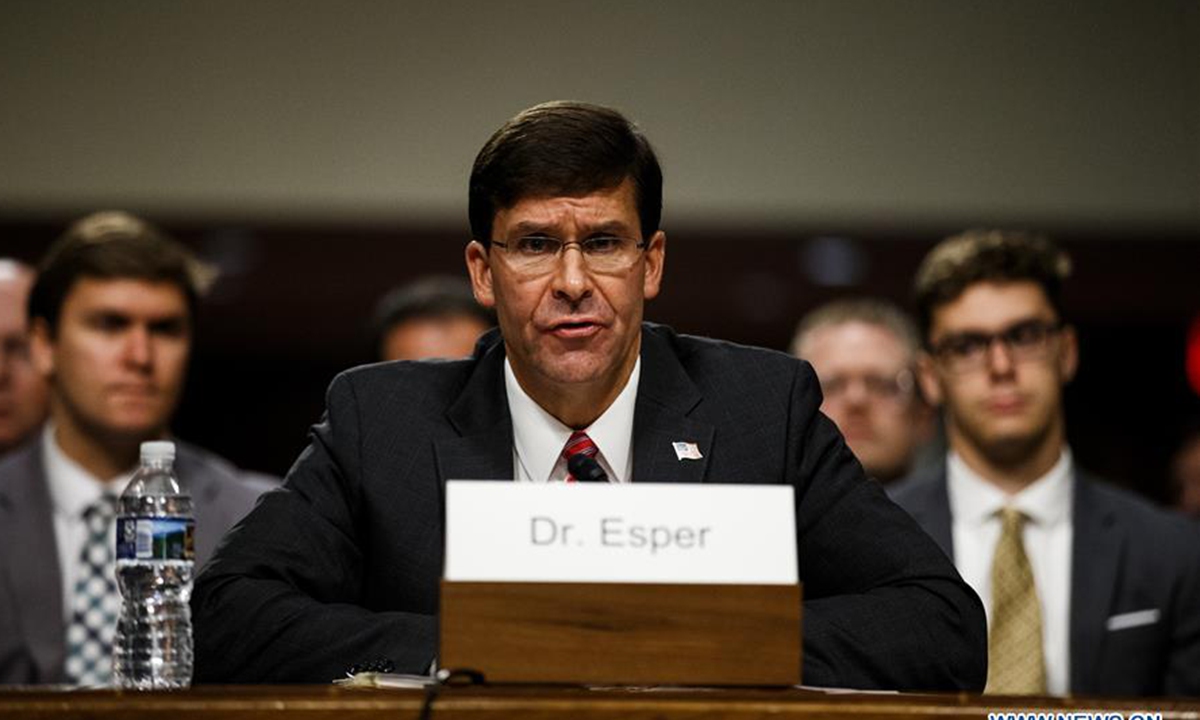
Mark Esper Photo: Xinhua

Mark Esper Photo: Xinhua


Mark Esper, the former US defense secretary under the Trump administration, landed on the island of Taiwan on Monday, three days after the US government approved a proposed $108 million arms sales of technical and equipment support to the Taiwan authorities, the fifth of its kind under the Biden administration.

Chinese mainland experts said despite having been out of the US government for about two years, Esper, who has close ties to the US military-industrial complex, will push for the arms package that Republicans want to see on the island of Taiwan. Esper could also further expand his political clout and obtain generous financial support from the Taiwan authorities.

Heading a three-member Atlantic Council delegation, Trump's defense chief is joined by Barry Pavel, senior vice president and director of the US-based think tank Atlantic Council, and Stefano Stefanini, former permanent representative of Italy to NATO, Taiwan-based media reported.

During his visit from Monday through Thursday, Esper is scheduled to meet with Taiwan regional leader Tsai Ing-wen on Tuesday, local media said. The delegation will reportedly interact with think tanks and businesses on the island and exchange views on the security and economic situation in the Indo-Pacific region.

Taiwan media said it's the fourth Taiwan visit by the Atlantic Council since Tsai took office in 2016, following previous trips in 2016, 2017 and 2018. Analysts said given that the Washington-based think tank is traditionally more about policy research on US-Europe collaboration, China should be wary of the US efforts to push its allies in Europe or NATO to focus on defense and security in the Taiwan Straits.

Dubbed "Taiwan's loyal friend" by the island's external affairs authority, Esper has intensified his anti-China stance since leaving office. At a think tank event in June, he hyped the "China threat" and questioned the efficacy of the US' "one-China policy."

Chinese Foreign Ministry spokesperson Wang Wenbin expressed strong opposition to the latest US arms sales to Taiwan island.

The US arms sales to China's Taiwan region seriously violate the one-China principle and the stipulations of the three China-US joint communiqués, especially the August 17 Communiqué of 1982. The sales gravely undermine China's sovereignty and security interests, and severely harm China-US relations and peace and stability across the Taiwan Straits, Wang said on Monday.

We urge the US side to abide by the one-China principle and the stipulations of the three China-US joint communiqués, revoke the above-mentioned arms sales plan, stop arms sales to and military contact with Taiwan and stop creating factors that could lead to tensions in the Taiwan Straits. China will continue to take resolute and strong measures to firmly defend its sovereignty and security interests, Wang said.

Chinese Ministry of National Defense on Monday also issued a stern warining to the US over the provocative move, saying that the People's Liberation Army will take resolute and strong measures to firmly defend China's sovereignty and security interests.

Diao Daming, an associate professor at the Renmin University of China in Beijing, told the Global Times on Monday that Esper has close ties to US military-industrial interests and to Republican elites, so his Taiwan trip could be seen as an attempt to make further arms sales.
Before becoming US defense secretary, Esper served as US secretary of the army from 2017 to 2019. A West Point graduate and a top lobbyist, Esper served as deputy assistant secretary of defense for negotiations policy in George W. Bush's administration from 2002 to 2004. In July 2010, he was hired as vice president of government relations at defense contractor Raytheon.

Analysts speculated that Esper's visit may reflect, to some extent, the divisions between US military interests and the Biden administration over arms sales to the island of Taiwan, given that sales to the region during the Trump administration were more about "heavy and large" weapons, while the Biden administration's sales have so far focused more on system maintenance and around the concept of building up asymmetric capacity.

Esper is not a member of the Biden administration, and his remarks will be a more direct representation of the ideas of the US military-industrial complex and, to some extent, of the Republican Party, Diao said. "These ideas may be different from the White House's, as selling the big stuff is always more profitable for arms dealers," he noted.

The US House of Representatives on Thursday passed an annual defense policy bill for fiscal 2023, approving a $37 billion boost to the budget proposed by President Joe Biden in March. US lawmakers cited "threats" posed by Russia and China for the budget increase, which also contained several Taiwan-related bills with the aim of reinforcing relations.

"The communications Esper makes on his trip could then be reflected at the legislative level by Republicans… It is possible that Republicans will add new amendments about arms sales to Taiwan to the bill, given it still has to be passed in the Senate," Diao said.

Another analyst who requested not to be named, told the Global Times on Monday that despite Esper's distance from the core of US politics, visiting Taiwan is a sure bet for him.
Esper could retain his personal influence through contacts with top officials from the Taiwan authorities, the analyst said.

In addition to enjoying a high-level tour reception, Esper could also earn tens of thousands of dollars, based on the appearance fee that his ex-colleague and former US secretary of state Mike Pompeo earned in Taiwan in March, they said.

According to Taiwan media, Pompeo's appearance fee was $150,000, while other fees including flight tickets and reception came to about $184,000. 

Source link'

 Biden admin’s 5th arms sale to Taiwan slammed for double dealing

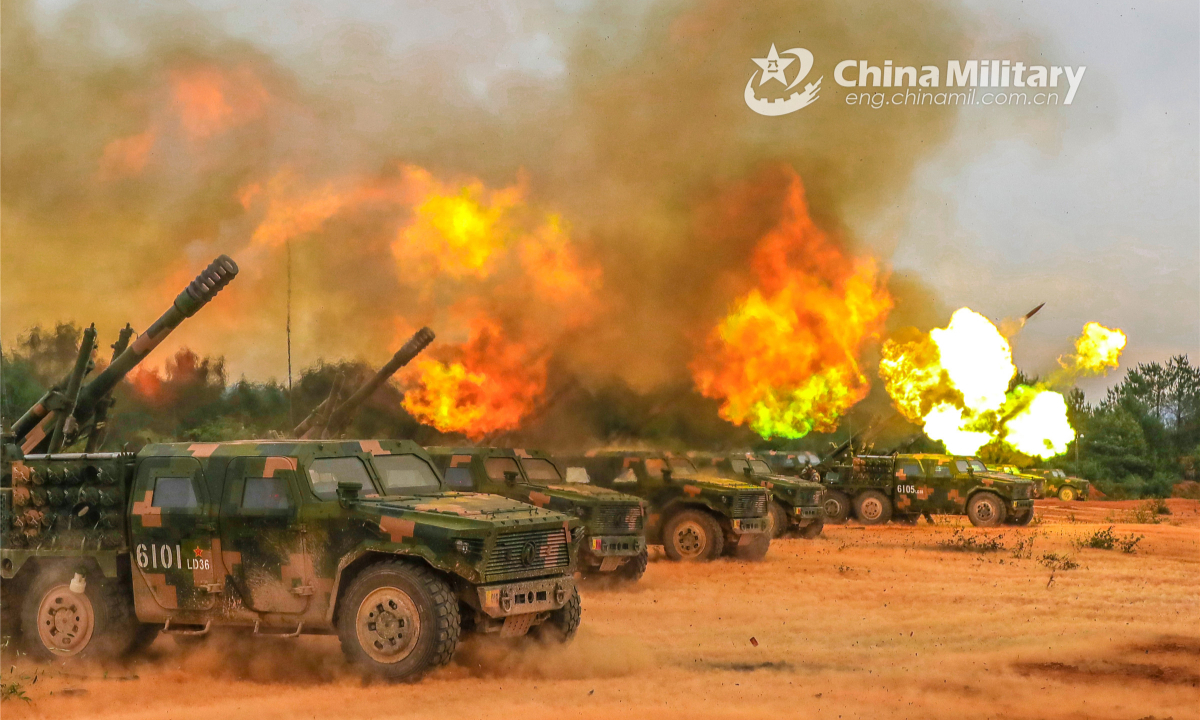
A line of vehicle-mounted howitzers attached to a combined-arms brigade with the army under PLA Eastern Theatre Command open fire during a live-fire exercise on June 16, 2022. Photo:China Military

A line of vehicle-mounted howitzers attached to a combined-arms brigade with the army under PLA Eastern Theatre Command open fire during a live-fire exercise on June 16, 2022. Photo:China Military


 The US on Friday (US time) announced the fourth arms sale to the island of Taiwan in 2022 - the fifth total under the Joe Biden administration - despite the Taiwan question has been repeatedly mentioned in several recent China-US high-level meetings which showed consensus for avoiding escalating tension.

Chinese mainland experts on Saturday slammed the latest US deal featuring a package involving spare parts for tanks and combat vehicles plus technical assistance worth $108 million, saying it exposed the US' two-faced nature and its failure to honor its own words.

The US State Department has approved the possible sale of military technical assistance to Taiwan for an estimated cost $108 million, the US Defense Security Cooperation Agency said in a press release on Friday.

The proposed sale will contribute to the recipient's goal of maintaining its military capability while further enhancing interoperability with the US and other allies, according to the press release.

The figure of $108 million is an unreasonably high price for just spare parts and intangible technical assistance, and it is obvious that the US arms firms are again leeching on Taiwan for its money, a Beijing-based military expert who requested anonymity told the Global Times on Saturday.
Taiwan's Democratic Progressive Party authority is only paying protection money for things that cannot help them gaining a chance standing up to the Chinese mainland's People's Liberation Army (PLA), the expert said.

The approval of the arms sale came after a sequence of frequent interactions between senior officials from China and the US since June, including those between Chinese State Councilor and Foreign Minister Wang Yi and US Secretary of State Antony Blinken, as well as Chief of the Central Military Commission Joint Staff Department General Li Zuocheng and Chairman of the Joint Chief of Staff General Mark Milley.

Both sides underscored consensus on avoiding escalating confrontations, and the Taiwan question was repeatedly mentioned especially during meetings between military officials, observers said.

But the latest US arms sale to Taiwan, as well as a US warship's recent trespassing into Chinese territorial waters in the South China Sea, exposed that the double-faced US is only offering lip services to China, analysts said.

The US' strategic goal is very clear now, which is to contain China's development. This means the promises that the US made during high-level talks are not trustworthy, and it will bound to continue provoke China on China's core interests including the Taiwan question, Song Zhongping, a Chinese mainland military expert and TV commentator, told the Global Times on Saturday.

China no longer has unrealistic illusions over the US, and the PLA is preparing for the worst-case scenario in which a cross-Straits conflict would take place in order to safeguard national sovereignty and territorial integrity, analysts said.

Some 10 PLA warplanes, including fighter jets and bombers, entered the island of Taiwan's self-proclaimed southwest air defense identification zone on Friday, the island's defense authority said in a press release on the same day. 

 Source link


Don’t say we didn’t warn you – Symposium of China’s top think tank sends classic, pre-war warning to provocative Pelosi


Don't say we didn't warn you – Symposium of China's top think ...

'Don't say we didn't warn you!' - a phrase that was used by the People's Daily in 1962 before China ...


US better clear the 'mine' of Pelosi's Taiwan trip beforehand: Global Times editorial “Those who play with fire will perish by it.” This was said to Pelosi and the Taiwan secessionist forces that support he

If Pelosi goes to Taiwan, it will be a huge historic mistake for Washington: Global Times editorial

Unlike Washington's opportunistic probing, all options are clearly on the table for the Chinese mainland. The noose around the neck of the "Taiwan independence" secessionist forces is tightening, and Pelosi has one foot on the stool of the gallows. If Pelosi, who has always been fond of playing tough on China, wants to insist on this way, we will definitely prepare sufficient "consequences" for her. 

 Pelosi could spark 'more serious' Taiwan Straits crisis; China-US ties would fall off cliff if Washington intended to crash 'guardrails'

Once again, media has reported that US House Speaker Nancy Pelosi plans to visit Taiwan in August after an aborted April visit to Asia that might include a trip to China's island due to testing positive for COVID-19, with analysts saying that if she intends to make a blatant provocation against China, she would spark a much more dangerous incident than the Taiwan Straits Crisis in 1996, and it would cause a huge setback for China-US ties. 


RELATED ARTICLES 

The US has approved new arms sales to the island of Taiwan and sent a warship close to ..\

 Why Western predictions on China were mostly wrong in past decade


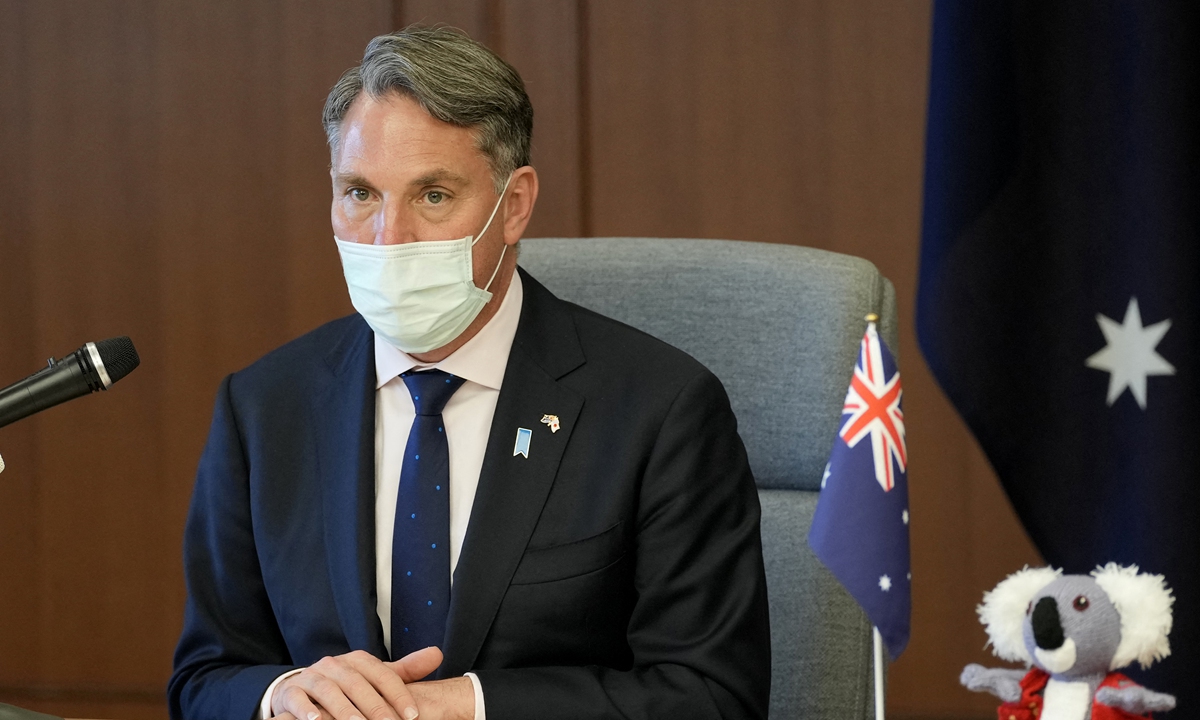
Australian Defense Minister Richard Marles Photo: AFP

Friday, April 29, 2022

It’s an ‘American disease’ to make an issue of China in all aspects: Global Times editorial
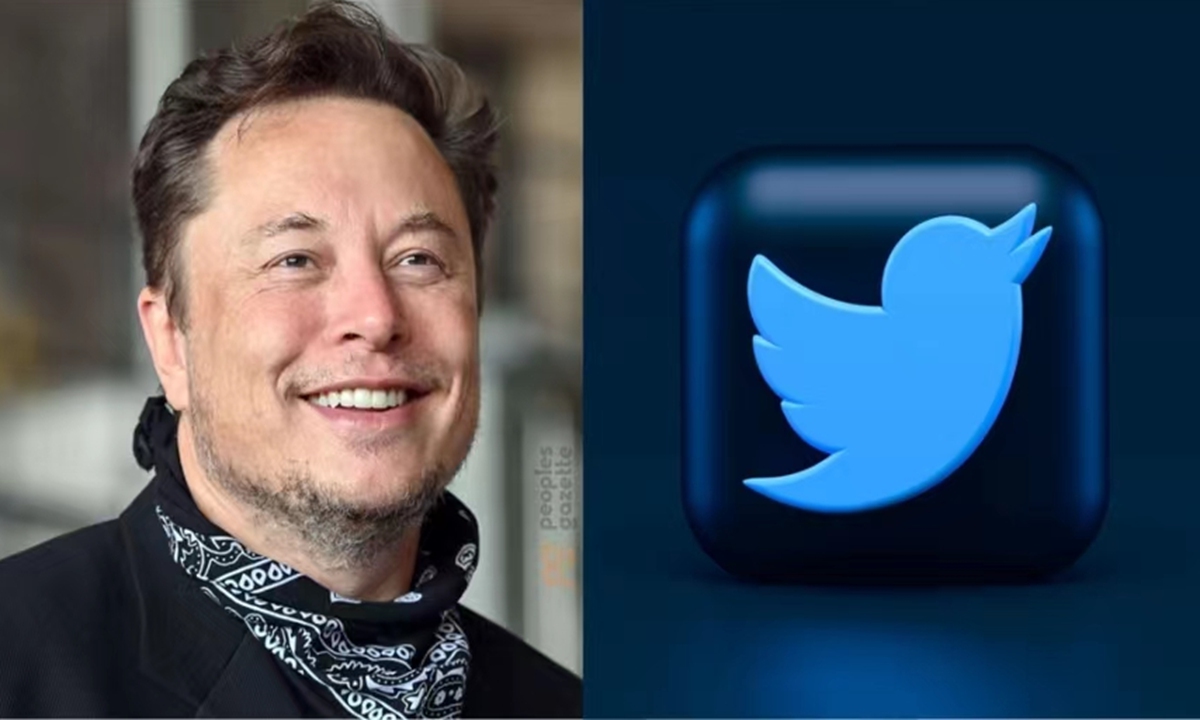
Tesla's founder Elon Musk inks a deal to purchase Twitter with $44 billion in cash. Photo: website 


News about Elon Musk's Twitter takeover has sparked continuous heated discussions in the US recently. The focus of some, however, has apparently been off the track. A New York Times reporter tweeted to question whether Twitter would become one of the platforms Beijing will gain leverage over in the future. It was re-tweeted and commented on by Amazon founder Jeff Bezos. There are also voices saying that Musk will have to seek a balance between his support for free speech and his business activities in China, and that China will exert influence on Twitter through Musk.
Many American media outlets didn't forget to "remind" people of the fact that Musk once "praised" China, and he encouraged people to visit China and see for themselves. At a critical moment when China and the US were locked in trade frictions in 2019, Tesla's Shanghai Gigafactory kicked into production. In merely over a year, Shanghai-made Teslas have accounted for more than half of Tesla's global delivery. Musk has dealt a lot with China and spoke out some truths about China's economy, they are regarded as "original sins" of Musk by some Americans. Many link Musk's Twitter deal with China and raise it to the level of "risks" or "threats", which shows how narrow the room for pragmatism and rationality toward China in the US has become. Similar incidents have become common in the US. Making an issue of China in every possible way has already become an "American disease." In the face of China's growing comprehensive national power that is closing the gap with the US', the confidence of many political elites in Washington has been declining. And these people are showing anxiety and over-sensitivity toward China, not letting go of any opportunity to hype the "China threat" theory. After Musk acquired Twitter, some from American media even urged Musk to cut off his business ties with China to "guarantee freedom of speech." Such extreme overbearingness hilariously overlaps their weakness.

An interesting phenomenon is that many China security-related discussions contain various "private interests" if you look at them closely. Some businesspeople, such as George Soros, blamed China for their failure due to their wrong investment decisions in China. Others try to show their allegiance to the US. For example, Bezos often stresses security with a high-profile patriotic posture, but what he actually eyes are Pentagon orders that are highly profitable. More lawmakers and politicians touch on the China topic in an exaggerated and forcible way, through which they attack opponents as "weak." The "China Threat" is becoming a tacit business approach or a code to seek attention.

From the national perspective, Sinophobia which is currently rampant in American society is not fundamentally different from "Japanophobia" that prevailed in the 1980s and 1990s. In both cases, the US regards a "chaser" as competitor, on which the US tried to suppress by any means to ensure its own competitive advantage. But the end of the story will be different because there is no way that Washington can overwhelm China in the same way that it coerced Japan to sign a Plaza Accord. Chinese people do not believe in fallacies, nor are we afraid of evil forces. We will never yield to threats or coercion. As to words and deeds of forcefully making an issue of China, they remind people of an ancient poem: Along the Yangzi River, apes moan ceaselessly. My boat has passed ten thousand mounts briskly.

It must be pointed out that making an issue of China can't save the US. Instead, it will continue to intensify all the problems Washington is facing, be they domestic or external, and squeeze the room to solve these issues in the future. Even some people of insight in the US have warned that the excessive attention on undermining Beijing's advantages could make Washington neglect its most important tasks at home and push its foreign policies to deviate from its course even further. "American hubris is always a danger, but so is exaggerated fear, which can lead to overreaction," wrote US scholar Joseph Nye last year. "The US and China must avoid exaggerated fears that could create a new cold or hot war," he added. It seems that those who are sick are unwilling to take medicine.

The US is trying to oppose China in every possible aspect, reflecting the peremptory squeezing of reality by the US' anti-China ideology. But the reality is also resisting the ideological pressure at all times. The twist has distorted some US elites' mindset, making them fall into hesitation and division. However, the "China threat" is not the root cause of Washington's internal and external problems. Reality will make them understand sooner or later that win-win cooperation is the effective cure for their disease.

  Source link.

RELATED ARTICLES


Monday, June 14, 2021

China’s newly passed Anti-Foreign Sanctions Law to bring deterrent effect against Western hegemony

  https://youtu.be/lP-u9Lmubog

China's Anti-Foreign Sanctions Law will surely become a pointed weapon to counter foreign sanctions


美推涉华法案打压中国 中方:不得人心 注定失败!20210609 |《今日关注》 https://youtu.be/VOPFUhKrzfk 


https://youtu.be/SLoPPxpOjMM

China's New Law To Counter US, EU Sanctions May Also Block Covid-19 Origin Investigation 

 Deportation, denying entry and freezing assets among countermeasures to stop long-arm jurisdiction 

Photo: Xinhua 


Top lawmakers in China on Thursday voted to pass the highly expected Anti-Foreign Sanctions Law, providing a comprehensive legal basis for blocking illegal foreign sanctions and preventing Chinese individuals and entities from suffering the damage resulting from such illegal sanctions. The new law will also offer sufficient legal foundation for taking an equal position with the West by imposing necessary countermeasures, Chinese legal experts said.

The Standing Committee of the 13th National People's Congress (NPC) convened its 29th session on Monday in Beijing, which was scheduled to conclude on Thursday, and draft version of the anti-foreign sanctions law was put to review for the second time on Monday. According to the rules and procedures of the legislative body, the draft law in the agenda of the NPC Standing Committee meeting should generally be reviewed three times before being put to a vote. However, if there is consensus on all aspects of the draft law, it can be reviewed twice.

The highly expected law, which is considered an effective and strong legal tool to stop the long-arm jurisdiction of foreign countries, includes 16 articles, stipulating principles of punishment for violating the law, and major authorities in enforcing it. Relevant authorities under the State Council - China's cabinet - can directly or indirectly participate in formulating, deciding and enforcing a countermeasure list targeted at individuals and entities that have taken discriminatory measures against Chinese citizens and organizations under the pretext of their domestic laws.

Targeted groups of the countermeasure list can be expanded to their relatives, spouse, the organizations that are led by these targeting individuals or operated by them, according to the law, which lays out a number of measures, including refusing to issue visas or denying entry, deportation, freezing properties and restricting relevant transactions and cooperation.

If any organization or individual assists foreign countries to take discriminatory measures, Chinese citizens and organizations can file a lawsuit with the people's court in line with the law and to stop infringement as well as seek compensation for losses, according to the law.

China also has set up a working mechanism in responding to foreign sanctions, which also coordinates relevant work, including information sharing. And authorities such as the Chinese Foreign Ministry or the State Council or others are responsible for releasing the list of countermeasures, which could be suspended or changed if necessary.

When the Legislative Affairs Commission of the NPC Standing Committee gave the example about who would be placed on the target of China's Anti-Foreign Sanctions Law, the spokesperson of the commission said that certain Western countries, under the pretext of Tibet, Hong Kong, Taiwan and the South China Sea, together with the COVID-19 pandemic, interfere in China's internal affairs, which are bullying tactics by imposing the so-called sanctions on Chinese government officials, as well as individuals and entities from those countries with misdeeds, would face countermeasures, which is seen as "having a taste of their own medicine."

"The law precisely and effectively targets those who have taken unilateral sanctions in hurting China's interests, and this targeted group can be expanded to their relatives or organizations, which would have strong deterrent effect," Huo Zhengxin, a law professor at the China University of Political Science and Law, told the Global Times on Thursday.

And besides detailed countermeasures, the law grants authorities flexibility to choose which measures to use to hit back, especially when measures fit their needs, Huo said.

Legal experts believed that the Anti-Foreign Sanctions Law, the first of its kind in China, will provide strong legal support and guarantees for the country against unilateral and discriminatory measures imposed by foreign countries, will also have a deterrent effect in the face of Western-led hegemony and demonstrate the collective determination of Chinese decision-makers in safeguarding China's core interests.

Compared to the previous countermeasures issued by administrative institutions, the law underscores in a more comprehensive and systematic way the Chinese government's attitude on the legal aspect when it confronts US government that has abused sanctions or long-arm jurisdiction to severely damage China's sovereignty, security and development interests, some legal experts who took part in the consultation process for the law told the Global Times. The anti-foreign sanctions law will also enable China to strike a balance between countermeasures and negotiations in fixing divergences. 

China's list of sanctions against Western forces over their meddling in China's domestic affairs related to HK, Taiwan and Xinjiang. Graphic: Xu Zihe and Feng Qingyin/GT

Necessary, timely move

The US government has been imposing sanctions on a growing number of Chinese entities such as high-tech firms Huawei and ZTE over the so-called national security risks, and sanctioned a number of senior Chinese officials under the US' so-called Xinjiang and Hong Kong bills last year. In the eyes of legal experts, these have become regular moves for the US government in implementing illegal sanctions and carrying out long-arm jurisdiction against China. The Anti-Foreign Sanctions Law has also become a timely response to those unilateral moves, which may prompt more countries to follow suit.

The latest legislative progress was also in line with the top legislature's annual work schedule, unveiled in March, which indicated that China will enhance legislation in foreign-related fields, when Li Zhanshu, chairman of the Standing Committee of the NPC, vowed to focus on moves against sanctions and interference and countering long-arm jurisdiction, as well as enriching the legal "toolbox" for coping with foreign-related challenges and preventing risks.

The law could have an influence in two fields - blocking illegal sanctions imposed by other countries and the damage brought about by those sanctions; and taking countermeasures against these sanctions, Tian Feilong, a legal expert at Beihang University in Beijing, told the Global Times on Thursday.

In response to the increasing unilateral moves made by the US government, Chinese authorities have also taken corresponding countermeasures since September 2020. For example, China's Ministry of Commerce (MOFCOM) unveiled the provisions of China's unreliable entity list, which has been viewed by some as a measure by Beijing to counter the US crackdown on Chinese companies. It also issued a new order on January 9 adopting necessary countermeasures against the unjustified extraterritorial application of foreign legislation.

China's Foreign Ministry also announced 11 rounds of countermeasures over Western countries' interference in China's internal affairs since last December such as Xinjiang and Hong Kong by sanctioning a number of NGOs, anti-China politicians, arms producers and entities, as well as lawmakers who helped spread lies about those matters.

"Previous sanctions are fragmented and without sufficient legal basis, and may incur negative feedback due to lack of sufficient legal basis. Now, we have complete legal basis, offering us the same position as the West in taking countermeasures," Tian said, noting that it will also help integrate previous resources and forms to make China's countermeasures against foreign sanctions more systematic, scientific and powerful.

Common practice

It's also common practice for some Western countries to formulate similar laws in blocking foreign sanctions or opposing foreign interference. For example, the blocking statute, adopted in 1996, is an important achievement of unified EU action to protect EU operators, whether individuals or companies, from the extraterritorial application of third country laws, according to the EU website.

And an updated version of the blocking statute was implemented in 2018 to mitigate their impact on the interests of EU companies doing legitimate business in Iran.

Russia also passed a law in June 2018to counter the unfriendly behavior of the US and other countries to protect the interests, security, sovereignty and territorial integrity, as well as the rights of its citizens immune to the unfriendly behavior of the US.

When asked whether the law would affect China's relations with foreign countries, Wang Wenbin, spokesperson of the Chinese Foreign Ministry, said at a routine press conference on Thursday that there is no need to worry about that.

"It's necessary for China to formulate the Anti-Foreign Sanctions Law, as the law provides a strong legal basis and support for China to counteract foreign discriminatory measures," Wang said.

The spokesperson of the Legislative Affairs Commission of the NPC Standing Committee also said the law won't have any impact on China's continuous opening-up regarding economic development, as it has come up with a series of measures to facilitate foreign investment.

The main purpose of China's Anti-Foreign Sanctions Law is to authorize Chinese administrative agencies and judicial institutions to implement sanctions, and if there's more demand in the practice, top authorities such as the State Council and the Supreme Court can issue corresponding detailed administrative regulations and judicial interpretations based on the authorization, and gradually refine a more specific legal system, Huo told the Global Times.

Some senior officials, such as Carrie Lam, chief executive of the Hong Kong Special Administrative Region, hailed the law. Lam said the law will give the US and other countries "a taste of their own medicine," because a number of central government and HKSAR government officials have been sanctioned by the US for the national security law for Hong Kong implemented in 2020.

"The HKSAR government lacked the resources to fight those sanctions in the past. With the implementation of the Anti-Foreign Sanctions law, they have the top authority's legal support on their backs," Tian said, noting that whether including the law into Annex III of the Basic Law or enabling the HKSAR government to revise or work on relevant anti-sanction local laws are both part of the consideration. 

Source link 


RELATED ARTICLES
 
'The Last G7': Satirical cartoon mocking bloc's attempt to suppress China goes ... A Chinese cartoonist's political satire, which mocked the Group of Seven (G7) members that attempt to suppress China, went viral . 

G7 communiqué makes a show but Chinese don't buy it The Group of Seven (G7) summit ended on Sunday. After the meeting, the countries issued a communiqué, which openly criticized China and mentioned issues related to China's Xinjiang, Hong Kong and Taiwan. The communiqué also mentioned opposition to “forced labor” and "unilateral attempts to change the status quo” in the East and South China Seas. Attitudes were expressed in different degrees of tone, with some directly naming China and others without calling China's name but making the country the unmistakable target. It has been the most systematic condemnation against and interference in China by major Western powers