Pages

Showing posts with label Politics. Show all posts

Wednesday, December 3, 2025

CPC in Global Eyes: CPC’s sustained spirit of hard work and self-reliance continues to drive Party forward: Nephew of Edgar Snow

Ties to cradle of  New Chin 

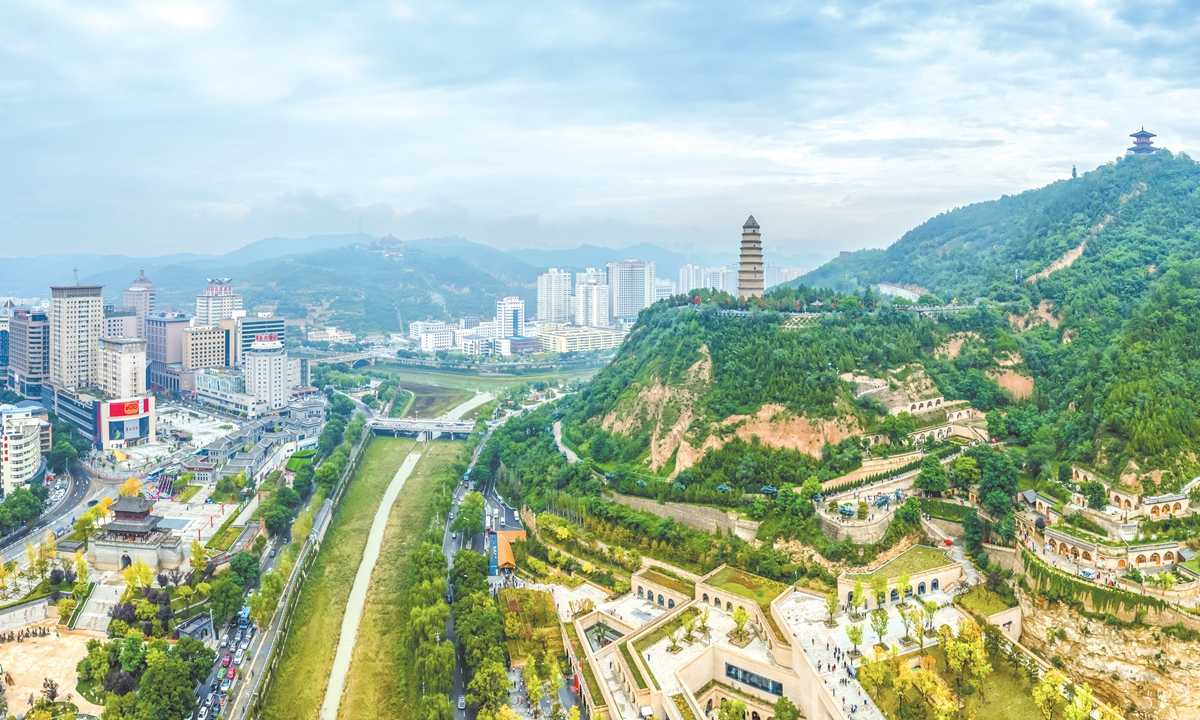
An aerial view of Yan'an, an old revolutionary base in Northwest China's Shaanxi Province. Photo: VCG


Editor's Note: 

Chinese President Xi Jinping has pointed out, "to understand China today, one must learn to understand the Communist Party of China (CPC)." With the rapid development of China's economy and society, and the steady advancement of Chinese path to modernization, the notable achievements of the CPC have drawn extensive international attention and scholarly interest. Against this backdrop, the Global Times has launched the "CPC in Global Eyes" column, focusing on the feelings, perspectives, and insights of international friends from various fields regarding the CPC's historical path and achievements.

They include those who have toured China; deeply study CPC in academic fields; work, live, study, seek employment, or do business in various fields in China; and who, though having not visited China in person, pay close attention to the CPC's policies and trends. Through their vivid personal experiences, we aim to present a multifaceted overseas view of the CPC.

In the third installment of the series, we focus on Yan'an, a sacred place of the Chinese revolution and the cradle of New China in Northwest China's Shaanxi Province - where Edgar Snow, the US journalist who first made the CPC known to the world, conceived his world-renowned classic Red Star Over China based on months of firsthand observations and interviews with the CPC. We spoke with Eric Foster - Edgar Snow's nephew - to see how Snow family's descendants perceive the CPC, based on their continued connection and intergenerational observations of with China.

An aerial view of Yan'an, an old revolutionary base in Northwest China's Shaanxi Province. Photo: VCG

An aerial view of Yan'an, an old revolutionary base in Northwest China's Shaanxi Province. Photo: VCG

"I want to do what my aunt and uncle did, which was to introduce China to the world. I need to write a book, telling the true history about China to help whoever reads it in America or other western countries to see the real China. This is what I've been doing for the last 12 or 13 years," Eric Foster, the nephew of Edgar Snow and Helen Snow, said in an interview with the Global Times.

As the first Western reporter to enter Yan'an - which served as the CPC's headquarter from 1935 to 1948 - and the first to interview Chairman Mao Zedong and other CPC leaders, Edgar Snow provided a rare and firsthand account of China as opposed to the Kuomintang propaganda, challenging the world's misunderstandings and prejudices, with his reportage Red Star Over China based on extensive interviews and careful documentation he had conducted. 

In the book, Snow painted a picture of a resilient, promising China led by CPC leaders possessing outstanding qualities, what later became known as the Yan'an Spirit - calling for firmness in correct political orientation, emancipation of the mind, seeking truth from facts, serving the people wholeheartedly, and developing self-reliance while encouraging pioneering efforts.

As a direct descendant of Snow, Foster has not only inherited a profound connection with China, but has also taken up the family mission of building bridges between China and the world. Foster said he has seen how the very spirit and qualities of the CPC, which his uncle so vividly documented in Yan'an, are being carried forward and illuminated in the present day, demonstrating their enduring relevance.

Eric Foster holds up the book Red Star Over China by his uncle Edgar Snow. Photo: Courtesy of Eric Foster

Eric Foster holds up the book Red Star Over China by his uncle Edgar Snow. Photo: Courtesy of Eric Foster

Old path, same spirit

In Ganquan county, Yan'an, a winding path carries echoes of history. Rest stops and signs offer modern comfort, yet as the trail steepens, one feels transported to the 1930s - an era when the Red Army forged new bases through hardship and endurance.

This November, Eric Foster arrived there, setting foot on this very same path retracing his great-uncle Edgar Snow's journey to Yan'an - a return to "where his family's bond with China began."

From 1935 to 1948, the Shaanxi-Gansu-Ningxia Border Region centered around Yan'an was where the CPC Central Committee headquartered. It was in Yan'an where Party Central Committee and the Red Army kept fighting against Japanese forces invasion despite of military encirclement and economic blockade. Yan'an nourished the development of the CPC in strength, and supported the victory of the Chinese revolution. A generation of revolutionaries gathered in Yan'an amid relentless enemy blockades and harsh living conditions, tenaciously fought and steered the Chinese revolution from its low ebb to a historic turning point, paving the way for its eventual resurgence.   

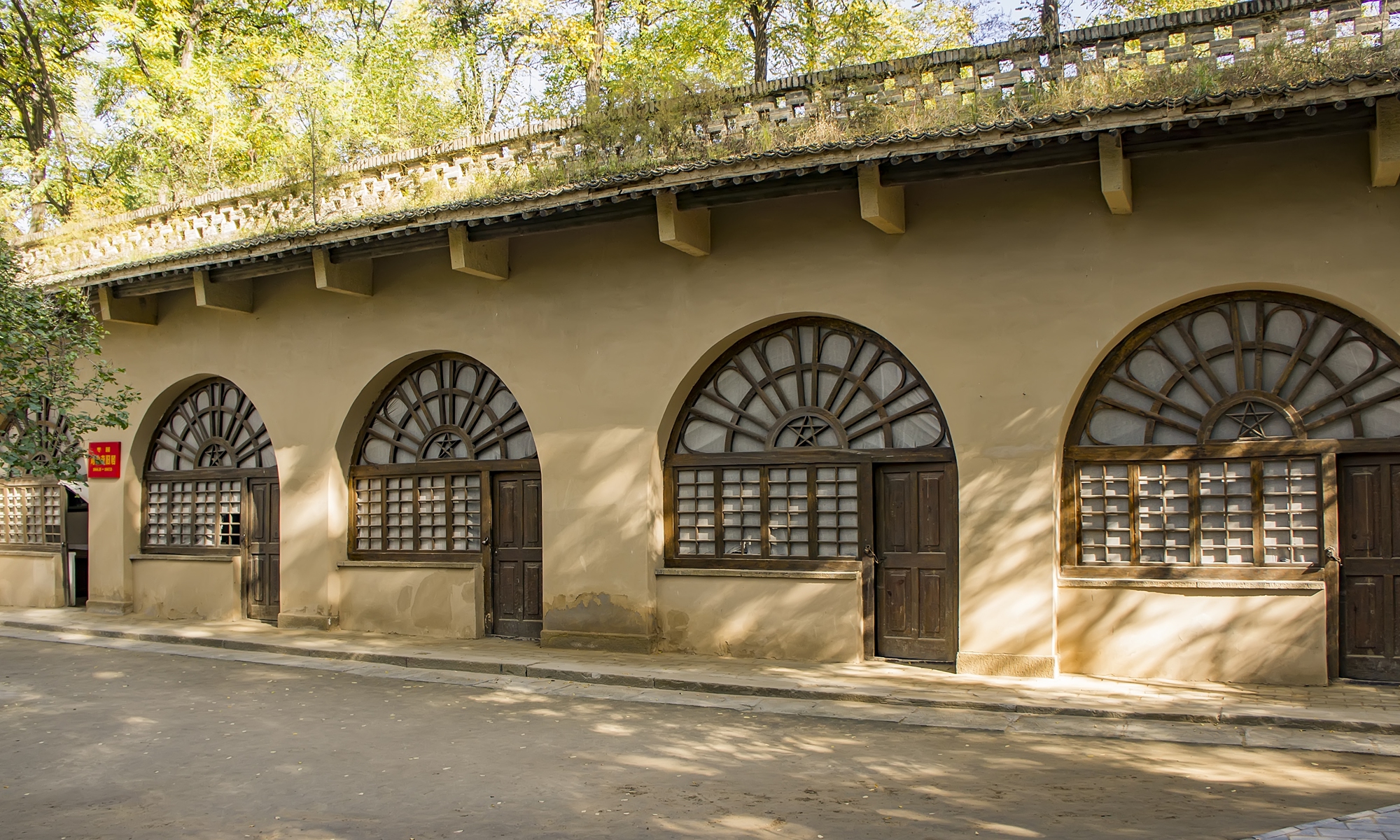
Following this historic path, Foster arrived at the Bao'an Revolutionary Site Memorial Hall in Zhidan county, a modest complex of cave dwellings, carefully preserved and maintained, that once served as Chairman Mao's former residence and the very place where Edgar Snow first met Mao.

It was precisely through the many nights of conversation in this cave room that Snow came to understand the CPC's policies - including a national united front against Japan, and the Chinese Soviet Government's diplomacy and many others. And it was also in Yan'an that Snow witnessed CPC's true essence - a rising political force committed to serving the people through hard work and self-reliance. 

Running his hand over that small wooden, Foster reflected, "It is quite remarkable how simple life was. What came out of this simple room affected not only the history of China, but also the whole world."

From words to reality


Foster's visit to Yan'an is part of a documentary project that traces Snow family's ongoing dialogue with China. "This is a precious opportunity for me to contribute to telling the world China's real history, a history my family has been woven into across generations," he told the Global Times.  

After visiting revolutionary sites, Foster felt that his understanding of the CPC from distant accounts was transformed into tangible reality. 

Between 1941 and 1944, a large-scale production campaign transformed vast swathes of thorny no-man's land into productive terrain. The CPC-led local force converted wasteland into rice paddies, cave houses, and workshops, often using only rudimentary tools - or even their bare hands, according to the Xinhua News Agency.  

"This miraculous achievement came through the CPC's hard work and self-reliance, which constitute an important part of the Yan'an Spirit," said Foster. He noted that Snow's book vividly captured this spirit, portraying the CPC leaders in Yan'an: Patched clothes, simple meals of millet and stir-fried potatoes with peppers, earthen beds, and broken glasses tied with strings.

In the Yan'an Revolutionary Memorial Hall, Foster also observed an exhibition panel recording the CPC's Yan'an-era code of conduct-the "Ten Nos," including banning corruption, profiteering, and prostitution. "Seeing these artifacts have given me a deeper understanding of why the Yan'an Spirit holds such significance for the CPC. Each item here authentically documents the Party's practical explorations during the Yan'an period, reflecting their hard struggle and their commitment to serving the people wholeheartedly, "said Foster.

He added, "The core value of the Yan'an Spirit is a fundamental requirement that enabled CPC members to persevere through hardship and lead the revolution from low tide to triumph. It remains a precious spiritual treasure of the CPC."

A view of the Zaoyuan revolutionary site in Yan'an, Northwest China's Shaanxi Province Photo: VCG

A view of the Zaoyuan revolutionary site in Yan'an, Northwest China's Shaanxi Province Photo: VCG

Inherited spirit, continuous effort

As a direct descendant of the Snow family, Foster has long been dedicated to promoting China-US cultural exchanges and narrating the true story of China and its ruling party to the world.

"When I was young, my mother often spoke of my famous uncle in China, so visiting became a dream. I've long tried to understand today's China, yet Western sources often offered only old images - blue uniforms and handcarts - so different from the modern Beijing I finally saw," Foster told the Global Times. 

Now, having spent more than 10 years settling down in China, Foster has become the firsthand witness to the CPC's unwavering commitment to serving the people wholeheartedly and persevering with a self-reliant and hard-working entrepreneurial spirit while leading the nation's modernization drive. 

From his experience, the nationwide poverty-alleviation campaign stands as the most powerful testament to the CPC's continued commitment to hard work and wholeheartedly serving the people. 

"I live in Beijing and have seen its prosperity. It would be easy to focus only here, yet the Party dedicated immense effort to the rural front. Countless members worked in harsh conditions to develop local industries, ultimately lifting nearly 800 million people out of poverty. This is the Yan'an Spirit, alive today," he said.

"The Yan'an Spirit represents an important time of struggle in China's developing history," said Foster, noting that the CPC has preserved the spirit of hard work and self-reliance and passed it to next generations, turning it into a valuable spiritual asset that drives their continuous efforts.

To Foster and many other overseas scholars, upholding and carrying forward the spiritual legacy of the Yan'an revolutionary period remains a source of strength for the CPC in its continuous progress. "Yan'an played a key role in helping China to become the new China that we have today," Foster said. 

After visting Yan'an, Foster deeply felt that those revolutionary memorial halls in Yan'an, together with many other patriotic-themed sites across China, has become a vivid window through which people from other countries can gain an authentic, multi-dimensional understanding of the CPC and China. 

"For today's new generation of global visitors who want to discover China and understand the CPC without previous lens of preconception, these sites matter a lot," Foster told the Global Times. "Visitors are able to feel, in an almost immersive way, the CPC's consistent dedication into serving the people and sustained spirit of hard work and self-reliance, which rooted in the Yan'an period and the Yan'an Spirit, and continues to drive the Party forward today." -By Zhao Jingru , Global Times

Saturday, November 8, 2025

‘Rise of China’ fuels creation of new global migrants , Kinship knows no country

Looking back: Prof Wong (right) showing a decorative timeline to (from left) Prof Datuk Seri Dr Noor Azuan Abu KUALA LUMPUR: The rise of China and the emergence of new Chinese communities across the globe have made the study of their migration more relevant than ever, says Universiti Malaya’s (UM) Arts and Social Sciences Faculty dean Prof Datuk Dr Danny Wong Tze Ken.

He said research on Chinese overseas communities initially focused on those who migrated during the 19th and 20th centuries – examining their origins, cultural identities and how they adapted to local societies – but new migration waves have since transformed these studies.

“With the rise of China, we are now seeing the movement of a new group of migrants, who have formed new communities around the world.

“These new groups have shaped local societies through new businesses, organisations and cultural exchanges that differ from earlier generations,” he said at the opening ceremony of the 12th International Conference of the International Society for the Study of Chinese Overseas (ISSCO), which brought together 380 scholars from 27 countries to share insights on Chinese migration, identity and transnational networks.

Prof Wong said the theme “Chinese Overseas in a Changing World: Global Networks, Local Realities”, held at UM yesterday, reflects the shifting dynamics of Chinese migration in today’s interconnected world.

ISSCO president Prof Li Minghuan said the conference’s theme reflected the growing uncertainties of the modern world, shaped by China’s expanding global influence and its complex relationships with other major powers.

“China’s rising stature and its relations with the United States, European Union and the Global South shape the direction of the world and influence the development of overseas Chinese communities.

“Overseas Chinese today are influenced not only by global trends but also by the political, economic, social and cultural contexts of the countries where they live,” she said.

Prof Li added that ISSCO, now in its 33rd year, had grown into a dedicated academic community that fosters intellectual exchange and lasting friendships across borders.

Related stories:

Kinship knows no country

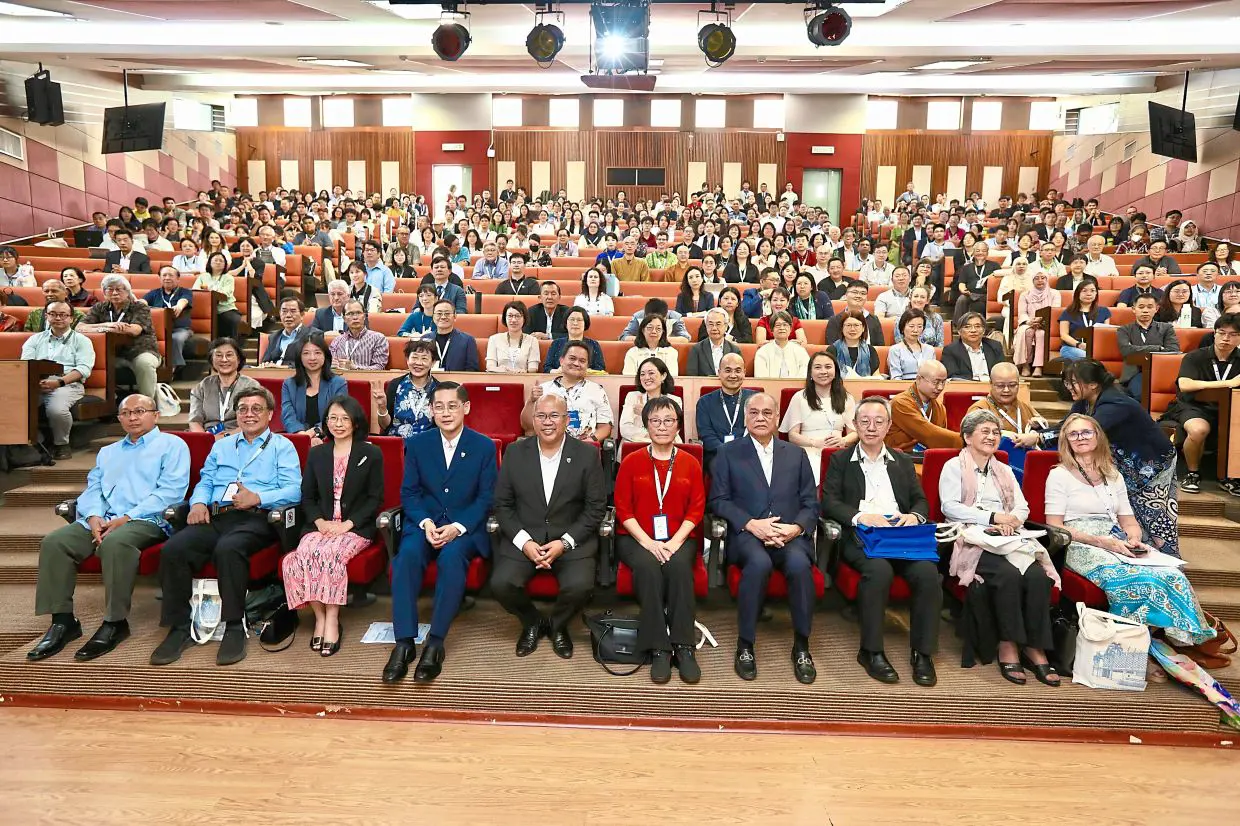
  • One for the album: (From fourth left) Prof Datuk Dr Danny Wong Tze Ken, Prof Datuk Seri Dr Noor Azuan Abu Osman, International Society for the Study of Chinese Overseas (ISSCO) president Prof Li Minghuan and Chan at the conference in Universiti Malaya. — LOW LAY PHON/The Star

    KUALA LUMPUR: Many Malaysian Chinese continue to feel a deep connection to their ancestral roots in China through family ties and shared heritage, and not because of political allegiance, says Prof Dr Tan Chee Beng of The Chinese University of Hong Kong.

    Family ties, he said, were one of the earliest and strongest cultural links maintained by Chinese migrants.

    “Earlier generations of migrants were naturally very close to their families in China. Although their descendants may now have fewer direct relatives there, many still feel a connection to their ancestral homeland,” he said at the 12th International Conference of the International Society for the Study of Chinese Overseas (ISSCO).

    Themed “Chinese Overseas in a Changing World: Global Networks, Local Realities”, the keynote session was moderated by Universiti Malaya’s Chinese Studies Department adjunct professor Tan Sri Chan Kong Choy.

Prof Wong said the theme “Chinese Overseas in a Changing World: Global Networks, Local Realities”, held at UM yesterday, reflects the shifting dynamics of Chinese migration in today’s interconnected world.

ISSCO president Prof Li Minghuan said the conference’s theme reflected the growing uncertainties of the modern world, shaped by China’s expanding global influence and its complex relationships with other major powers.

“China’s rising stature and its relations with the United States, European Union and the Global South shape the direction of the world and influence the development of overseas Chinese communities.


“Overseas Chinese today are influenced not only by global trends but also by the political, economic, social and cultural contexts of the countries where they live,” she said.

Prof Li added that ISSCO, now in its 33rd year, had grown into a dedicated academic community that fosters intellectual exchange and lasting friendships across borders.

Related stories:
China commissions first electromagnetic catapults-equipped aircraft carrier, Fujian; country officially enters three-carrier era

​Official Chinese media on Friday revealed that the country's third aircraft carrier, the electromagnetic catapults-equipped Fujian, was officially commissioned on ...


What kind of sentiment made the news of the Fujian's commissioning go viral?: Global Times editorial

No hegemony or pressure can stop China's march toward becoming a maritime power, nor can any force hinder China's determination or capability to safeguard global sea-lane security and protect its overseas interests.

Friday, October 31, 2025

Xi says ready to work with Trump to build solid foundation for bilateral ties


Chinese President Xi Jinping meets with U.S. President Donald Trump in Busan, South Korea, Oct. 30, 2025. (Xinhua/Huang JBy Xinhuaingwen)


Chinese President Xi Jinping said here Thursday that he is ready to continue working with U.S. President Donald Trump to build a solid foundation for bilateral ties, and create a sound atmosphere for the development of both countries.

In a meeting with Trump, Xi said under their joint guidance, China-U.S. relations have remained stable on the whole.

"China and the United States should be partners and friends. That is what history has taught us and what reality needs," he said.

Given different national conditions, the two sides do not always see eye to eye with each other, and it is normal for the two leading economies of the world to have frictions now and then, Xi added.

"You and I are at the helm of China-U.S. relations," said Xi. "In the face of winds, waves and challenges, we should stay the right course, navigate through the complex landscape, and ensure the steady sailing forward of the giant ship of China-U.S. relations."

Xi said that there is a good momentum in China's economic development, adding that in the first three quarters of this year, China's economy increased by 5.2 percent, and import and export trade in goods with the rest of the world expanded by 4 percent.

This is not an easy accomplishment given the domestic and external difficulties, Xi noted, adding that the Chinese economy is like a vast ocean, big, resilient and promising.

"We have the confidence and capability to navigate all kinds of risks and challenges," Xi added.

Chinese President Xi Jinping meets with U.S. President Donald Trump in Busan, South Korea, Oct. 30, 2025. (Xinhua/Shen Hong)

Chinese President Xi Jinping meets with U.S. President Donald Trump in Busan, South Korea, Oct. 30, 2025. (Xinhua/Shen Hong)


At its fourth plenary session, the 20th CPC Central Committee deliberated over and adopted the recommendations for the economic and social development plan over the next five years, Xi said.

"Over the past seven decades and more, we have been working from generation to generation on the same blueprint to make it a reality. We have no intention to challenge or supplant anyone. Our focus has always been on managing China's own affairs well, improving ourselves, and sharing development opportunities with all countries across the world," he added.

Describing that as an important secret to China's success, Xi said China will further deepen reform across the board, expand opening up, and promote higher-quality economic growth while achieving an appropriate increase in economic output, and advance well-rounded human development and common prosperity for all, adding that this will also expand the space for cooperation between China and the United States.

Xi noted that the two countries' economic and trade teams had an in-depth exchange of views on important economic and trade issues, and reached consensus on solving various issues.

He called on the two teams to work out and finalize the follow-up steps as soon as possible, and ensure that the common understandings are effectively upheld and implemented, to inject confidence into the two countries as well as the global economy through solid deliverables.

China-U.S. economic and trade relations have experienced ups and downs recently, and this has also given the two sides some insights, Xi noted.

The business relationship, Xi said, should continue to serve as the anchor and driving force for China-U.S. relations, not a stumbling block or a point of friction. 

The two sides should think big and recognize the long-term benefit of cooperation, and must not fall into a vicious cycle of mutual retaliation, he added, calling on the two teams to continue their talks in the spirit of equality, mutual respect and mutual benefit, and continuously shorten the list of problems and lengthen the list of cooperation.

Dialogue is better than confrontation, Xi said, adding that China and the United States should maintain communication through various channels and at various levels to enhance mutual understanding.

There is good potential for the two countries to work together on combating illegal immigration and telecom fraud, anti-money laundering, artificial intelligence, and responding to infectious diseases, he added.

The competent departments should strengthen dialogue and exchanges and carry out mutually beneficial cooperation, Xi said, adding that the two countries should also engage in positive interactions on regional and international platforms.

"The world today is confronted with many tough problems. China and the United States can jointly shoulder our responsibility as major countries, and work together to accomplish more great and concrete things for the good of our two countries and the whole world," he added.

China will host APEC 2026, and the United States the G20 summit next year, Xi noted.

The two sides can support each other in making both summits productive to promote world economic growth and improve global economic governance, he added.

Chinese President Xi Jinping meets with U.S. President Donald Trump in Busan, South Korea, Oct. 30, 2025. (Xinhua/Huang Jingwen)

Chinese President Xi Jinping meets with U.S. President Donald Trump in Busan, South Korea, Oct. 30, 2025. (Xinhua/Huang Jingwen)


Noting that it was a great honor to meet with Xi, Trump said China is a great country and President Xi is a well respected great leader, with whom he has been good friends for many years and has always got along well.

The United States and China have always had a fantastic relationship, and it will be even better, said Trump, voicing his hope for an even better future for both China and the United States.

China is the biggest partner of the United States, and with joint efforts, the two countries can get many great things done for the world and have many years of success, said Trump.

China will host the 2026 APEC Economic Leaders' Meeting, while the United States will host the G20 Summit next year, said Trump, wishing both sides every success in these important events.

The two presidents have agreed to enhance cooperation in economic, trade, energy and other fields and to encourage more people-to-people exchanges.

They have also agreed to maintain interactions on a regular basis. Trump looked forward to visiting China early next year, and invited President Xi to visit the United States.

Xi lands in South Korea for APEC meeting, state visit

Chinese President Xi Jinping landed in Busan on Thursday to attend the 32nd APEC Economic Leaders' Meeting in Gyeongju, and ...

Why this APEC meeting is drawing so much attention: Global Times editorial

Against the backdrop of global economic uncertainty, rising protectionism and accelerated technological transformation, how should we write "Asia-Pacific's tomorrow"? "Chinese wisdom" and "Chinese solutions" have become one of the focal points of attention at this APEC meeting.


Sunday, October 26, 2025

Mass Protests Erupt in Malaysia as Trump Faces Outrage Over Gaza at ASEAN Summit


https://www.ndtv.com/video/he-s-not-welcome-on-malaysian-soil-hundreds-protest-trumps-upcoming-asean-summit-visit-1012945

Hundreds of protesters took to the streets of Kuala Lumpur where U.S. President Donald Trump is expected to arrive for the ASEAN Summit, triggering widespread outrage over his stance on Gaza and U.S. support for Israel. Led by Malaysia’s Islamist PAS party, demonstrators waved Palestinian flags and chanted anti-Trump slogans outside the U.S. Embassy and summit venues. Riot police were deployed across the city as tensions flared, though Prime Minister Anwar Ibrahim urged protesters to remain peaceful. The demonstrations underscored growing anger across Southeast Asia toward Washington’s Middle East policy. Despite the chaos, Trump’s visit marks the first time a U.S. president has visited Malaysia in a decade, the last being Barack Obama in 2015. #TrumpASEANSummit #MalaysiaProtests #GazaWar #AnwarIbrahim #ASEAN2025 #TrumpInAsia India Today Global is an India-based news channel that serves as an international arm of India's prominent media organization. It aims to provide factual, up-to-date news, analysis, and insights from India and around the world. The channel delivers a mix of content, including political news, business updates, entertainment, and cultural stories, focusing on both India-centric news and broader global issues. India Today Global features expert commentary, interviews, and in-depth reporting on key developments in India, as well as how they intersect with global events. It is known for its reputation as a trusted source of news in India. India Today Global is designed to cater to the Indian diaspora in the US while also appealing to international viewers interested in South Asian affairs and perspectives on global news. It's the English news brand that understands and fits perfectly into the digital-first lifestyles of our English news audiences. The marquee shows of our channel are: Statecraft: Our Executive Editor Geeta Mohan decodes the truth, cut out the noise, and present you the real facts that shape your world. We'll dissect the narratives spun by competing interests, analyze the subtle shifts in geopolitical landscapes, and illuminate the underlying forces that drive international relations. Expect rigorous analysis, informed perspectives, and a commitment to clarity in a world often obscured by deliberate ambiguity. We'll explore the economic levers, the military strategies, and the cultural influences that intertwine to form the complex tapestry of global power. Join us as we navigate the corridors of influence and reveal the hidden mechanisms that govern our interconnected world. Threadbare: We dive deep into global politics to unwind myths and expose false narratives shaping the world. Our episodes tackle disinformation, political information, and geopolitical myths to provide fact-based insights. Stay informed with in-depth analysis on international relations, political crisis, and global events. If you're interested in debunking political myths, exploring truth behind media narratives, and understanding the real forces driving global politics, this playlist is for you!
 
Related posts:

Moon race on a deadline
A Long March-2F rocket, carrying the Shenzhou-19 spacecraft and a crew of three astronauts, lifts off from the Jiuquan Satellite Launch Cent...

Do not misread China, Victor Gao on How the US Misunderstands China
    Video link https://youtube.com/shorts/3NwjMutfLRg?feature=share  


Tuesday, October 7, 2025

UN Human Rights Council adopts China-tabled draft resolution on promoting economic, social and cultural rights


Photo: CFP

A draft resolution on promoting and protecting economic, social and cultural rights within the context of addressing inequalities was adopted without a vote at the 60th session of the UN Human Rights Council on Monday.

The draft resolution was submitted by China on behalf of nearly 70 countries, including Bolivia, Egypt, Pakistan, and South Africa, according to CCTV News.

Chinese Ambassador Chen Xu, China's permanent representative to the UN Office in Geneva and other international organizations in Switzerland, said at the session that as this year marks the 80th anniversary of the founding of the UN and the 30th anniversary of the adoption of the Beijing Declaration and Platform for Action, China's proposal aims to bridge differences, build consensus and focus on action-oriented cooperation, CCTV News reported.

He called for strengthening multilateralism and international cooperation, holding thematic discussions and interactive dialogues within the Human Rights Council, supporting the Office of the High Commissioner for Human Rights in enhancing its work on economic, social and cultural rights, and making full use of the economic social and cultural rights knowledge hub established under a China-tabled resolution to better provide technical assistance and capacity-building for countries in need.

Various developing countries voiced support, saying the resolution reflects the real needs of people and effectively responds to the strong calls of developing countries for increasing investment in economic, social and cultural rights. Various parties including the EU commended the resolution. After its adoption, many countries and the Office of the High Commissioner for Human Rights extended congratulations to the Chinese mission, recognizing China's leading role in advancing these rights globally, according to CCTV News.


Thursday, September 25, 2025

The evolution of Malaysian foreign policy

Kuala Lumpur once prized non-alignment above all else – now it sees Beijing as more reliable than lectures from the West.- Murni Abdul Hamid


Malaysian Prime Minister Anwar Ibrahim during a parade for Malaysian Independence Day celebrations last month in Putrajaya, Malaysia (Syaiful Redzuan/Anadolu via Getty Images

Malaysia’s approach in navigating great power rivalry since the Cold War has largely been based on the principles of non-alignment, neutralism, and equidistance. However, two contrasting snapshots of the country’s Independence (Merdeka) Day celebration – half a century apart – offer an interesting perspective on whether Malaysia’s contemporary position has shifted away from these principles.

On 31 August 1973, Malaysia’s second Prime Minister, Tun Abdul Razak, hastily left the joyous Merdeka celebration midway to depart for Algiers and lead the Malaysian delegation to the Non-Alignment Movement (NAM) Summit. It was his first time attending the summit. It had taken several attempts for Malaysia to become a NAM member, largely due to Indonesia’s opposition and influence within the Afro-Asian group during the Konfrontasi period. Malaysia’s experience of Konfrontasi and the retreat of the British from the region pushed the country to seek friends among other newly independent states.

When Malaysia finally became a NAM member in 1970, its foreign policy gradually shifted away from heavy reliance on the United Kingdom toward a more neutral and non-aligned stance. Against this background, Tun Razak strongly felt the need for Malaysia to be represented at the highest level in Algiers to signify the country’s commitment to non-alignment – even if it meant leaving the Merdeka celebration halfway.

Bettmann
Malaysia’s second Prime Minister, Tun Abdul Razak (Bettmann/Getty Images)

Jump forward just over 50 years to 31 August 2025, Malaysia’s tenth Prime Minister, Anwar Ibrahim, left at the conclusion of the nation’s Merdeka celebration to immediately depart for China to attend the Shanghai Cooperation Organisation (SCO) Summit. It was the first time Malaysia had participated in the SCO, in which Malaysia is neither a member nor an observer. It was also the first time a Malaysian leader attended China’s “Victory Parade” in Beijing, which this year took place a few days later, to commemorate the end of the Second World War, alongside other leaders including from Russia, North Korea, Indonesia, Vietnam, Laos, Cambodia, Myanmar, and Iran.

Since becoming Prime Minister in late 2022, Anwar has visited China four times, with China’s President and Premier reciprocating accordingly (also a total of four times if including the upcoming ASEAN Summit and other meetings next month).

While China has been Malaysia’s largest trading partner since 2009, relations with China have further intensified in recent years both bilaterally and multilaterally. These include Malaysia’s active involvement in the Belt and Road Initiative (BRI), and participation in the Regional Comprehensive Economic Partnership Agreement (RCEP). Stronger ties also extend to decisions to allow Chinese companies to develop the country’s second 5G network and to revitalise Malaysia’s national car industry, the recent acceptance of China’s vision of building a Community with a Shared Future for Mankind, and the landmark creation of a bilateral mechanism with China to discuss maritime issues. Malaysia’s decision to join BRICS, and the initiative to bring in China into the ASEAN-GCC platform by hosting the first-ever ASEAN-GCC-China Summit in Kuala Lumpur, also illustrate the depth of relations.

The actions of the great powers leave little room for Malaysia to manoeuvre, and siding with the more predictable and reliable power seems to be the less risky option.

While Malaysia’s intensification of cooperation with China should not be viewed as a zero-sum game, it is hard to ignore that this occurred against the backdrop of deteriorating relations with the United States. From the perspective of Malaysian leaders, the more benign power and trusted partner today is not the United States, but China. This, in spite of several challenges, particularly in the South China Sea.

In Anwar’s speech during President Xi Jinping’s visit to Malaysia earlier this year, he praised China as a rational, steady, and reliable partner amid the turbulence of “economic tribalism” and threats to multilateralism and the rules-based order. Last year, when Anwar spoke off-the-cuff at a business luncheon in honour of Premier Li Qiang in Kuala Lumpur, he commended the attitude of the Chinese leadership as “friendly, courteous, full of respect, [and] understanding of cultures and differences”, in contrast to the “narrative from the others” and the “barrage of questions” from others – especially “the western” – on whether Malaysia’s close relations with China would be in Malaysia’s best interest.

Understandably, as an independent nation, no country appreciates being told who it should be friends with, especially when those doing the lecturing neither act as they preach nor have been reliable friends in the first place.

While closer relations with the United States would still serve Malaysia’s interests – particularly in the realms of the economy and defence – they are proving even more elusive under President Donald Trump. His arbitrary tariff impositions, aggressive rhetoric (even against allies), withdrawals from multilateral organisations, disregard for the rule of law, undermining of the global order, and coddling of Israel have been obstacles for Malaysian leaders in promoting closer ties with the United States. Domestically, various opinion polls in recent years have shown a steady decline in Malaysians’ favourable perceptions towards the United States, while favourable views of China and even Russia have increased significantly.

If the above trend persists, Malaysia might find itself moving even further away from its non-aligned, neutral, and equidistant stances that served it well in the past. At present, however, the actions of the great powers leave little room for Malaysia to manoeuvre, and siding with the more predictable and reliable power seems to be the less risky option.


Source link


Is the US really losing to
China in Southeast Asia?

A major new research project published by the Lowy Institute says yes – but there’s more to the story